
Inspiring Change Every Day with Grace
Desire, Boundaries and Consent

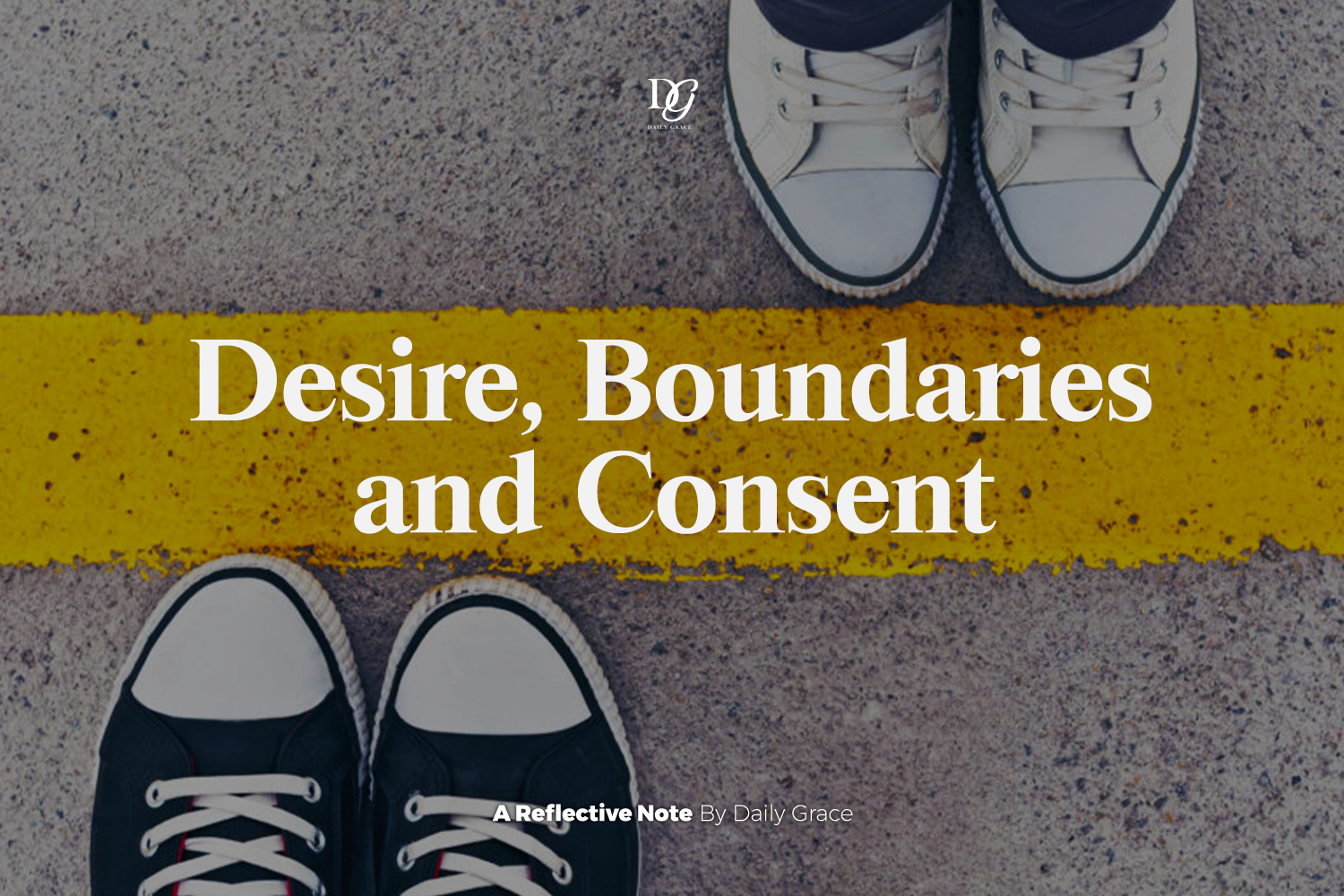
Desire is not the villain we often make it out to be. It is raw human energy that is deeply revealing. What we long for usually points to something meaningful inside us: connection, affirmation, purpose, pleasure, rest.
Desire is a messenger, not a master. The trouble begins when we confuse intensity with truth and urgency with entitlement. Healthy desire listens; unhealthy desire demands. The former helps us to grow whereas the latter impedes progress.
At its core, desire seeks fulfillment, but it does not always know the right path to it. Like hunger, it can be legitimate and still misdirected. You can be hungry and still reach for junk food which in turn, harms you.
In relationships, ambition, faith, and even ministry, desire often disguises itself as ‘need.’ When that happens, boundaries feel like obstacles instead of protection, and consent becomes optional. That is a dangerous zone because anything pursued without respect eventually becomes exploitation of others or of yourself.
Real-life desire shows up in subtle ways. It’s the message sent too late at night when you already sensed hesitation. It’s the pressure to keep pushing an idea, a relationship, or an opportunity after a clear “not now” has been expressed.
It’s the inner voice that says, “If I want it badly enough, it must be right.” But desire that ignores limits is no longer love-driven; it becomes controlling. It stops asking, “Is this mutual?” and starts insisting, “This must happen.”
Here is where consent is essential. Consent is not just an affirmative yes; it is the freedom for your conscience or another person’s to choose without fear, pressure, or manipulation.
Healthy desire respects that freedom because it values people more than outcomes. It ensures that boundaries are considered and “elastic limits “ are not exceeded. When desire is mature, it can wait. When it is immature, it rushes.
Self-consent as an inner boundary cannot be overemphasised. Some desires persist not because they are right, but because they distract us from discomfort we do not want to face. Loneliness, insecurity, boredom, or fear of being unseen gives room for unhealthy desire to operate.
In those moments, desire becomes a coping mechanism. It promises relief but demands silence from your subconscious mind. That is how desire can subtly control you while convincing you that you are finally living and enjoying life to the fullest
The work, then, is not to kill desire but to educate it. Mature desire learns to ask better questions: Does this align with my values? Does this respect the timing and boundaries involved? Is this drawing me toward wholeness or toward dependency?
Desire grows healthier when it is slowed down, named honestly, and guided by purpose rather than impulse. Boundaries do not weaken desire; they refine it. They turn craving into choice and attraction into intention. You gain personal power when you stop being impressed by the loudness of your wants and start listening to their source. Desire that respects limits becomes a force for deeper love, clearer decisions, and lasting growth. And in that space, desire becomes something sacred—strong, but safe.
©️ No Copyright infringement intended.PS: Kindly Follow our WhatsApp Channel at https://whatsapp.com/channel/0029VawUlQGBPzjQXzs6fX2Q for more engaging content.