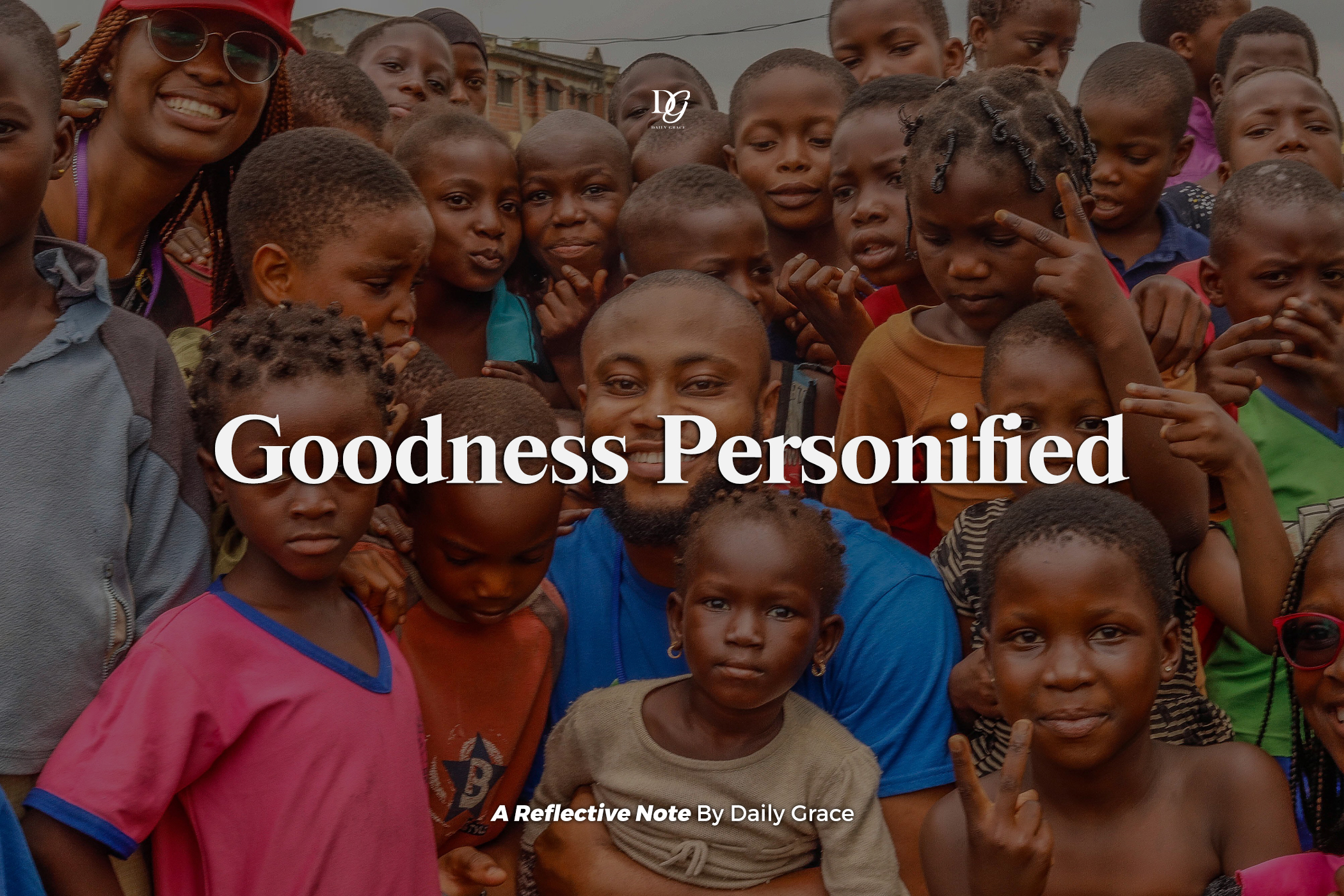
On a busy morning, a fellow noticed an elderly woman struggling with two heavy bags as she tried to cross the road. He stopped, carried the bags across, smiled, and continued on his way. Before leaving work, Fiifi shared some useful information with a cleaner who was trying to apply for a better-paying job.
Having known him for years, I was not taken aback at all. Fiifi did not wait for an opportunity to do good. He had simply become the kind of person who naturally looked for ways to make life a little better for people around him. What amazed me was the answer he gave when I asked him how he does these things effortlessly. He said, “I always ask myself, who around me could benefit from what I already have today?”
Initially, I thought his kindness was a strategy to obtain favour from those in authority, establish some beneficial relationships, and seek validation. However, his personality has made me realise the difference between doing good occasionally and becoming good in practice.
One is an event; the other is a way of living. When goodwill becomes a lifestyle, I will stop waiting for dramatic moments before I become useful. Like Fiifi, I will begin noticing ordinary opportunities to contribute through my words, skills, attention, resources, relationships and presence for the betterment of others.
I have realised that consistency is often less glamorous than generosity. A large gift can be remembered because it is visible. But there is something powerful about the person who repeatedly shows up in small ways. The person who checks on someone who has been unusually quiet. The colleague who shares knowledge instead of guarding it. The leader who creates opportunities for people who are rarely considered.
These actions may never become stories worth posting, but they gradually create a different kind of community. Goodwill becomes culture when enough people practise it consistently.
It is easy to be generous when people are watching or when generosity makes me feel noble. It is harder to remain kind when nobody notices, when there is nothing to gain, or when the person I help cannot return the favour. If my goodness depends on recognition, then I am not yet practising goodwill as a lifestyle; I am practising goodwill when it is rewarding.
I also see how much our environment shapes the way we treat one another. In a society where people are often under pressure to survive, it is easy to become preoccupied with my own needs. I may walk past someone’s difficulty because I am already carrying my own. The truth of matter is that sometimes people are not unkind per se; they are simply exhausted.
That is why a culture of goodwill cannot depend only on extraordinary individuals. It is paramount for families, workplaces, churches, schools and communities to intentionally create environments where people are encouraged to notice and support one another. When kindness becomes embedded in the way we operate, doing good no longer feels like an interruption to life. It becomes part of life.
I have also learned that adding value is much bigger than giving money. I can add value through competence. I can teach something I know, recommend someone’s work, share an opportunity, give honest encouragement, or make someone’s difficult day lighter with a thoughtful word. Sometimes my greatest contribution is simply using what I already possess instead of waiting until I have more. I do not need to be wealthy to be useful. I need to become more attentive to what is already within my reach.
Like Fiifi, I do not want to wait for a crisis before I become useful. I’d like to become conscious of who could benefit from what I already have each day. I want to notice the small opportunities and make good use out of them. In the end, a life of goodwill is not built through one extraordinary act. It is built through ordinary acts repeated until goodness becomes part of who I am.
Ready to turn goodwill into action? Tap on the link https://teamdailygrace.com/projects/ to partner with us and support Daily Grace community projects.
©️ No Copyright infringement intended.
PS: Kindly Follow our WhatsApp Channel for more engaging content.