
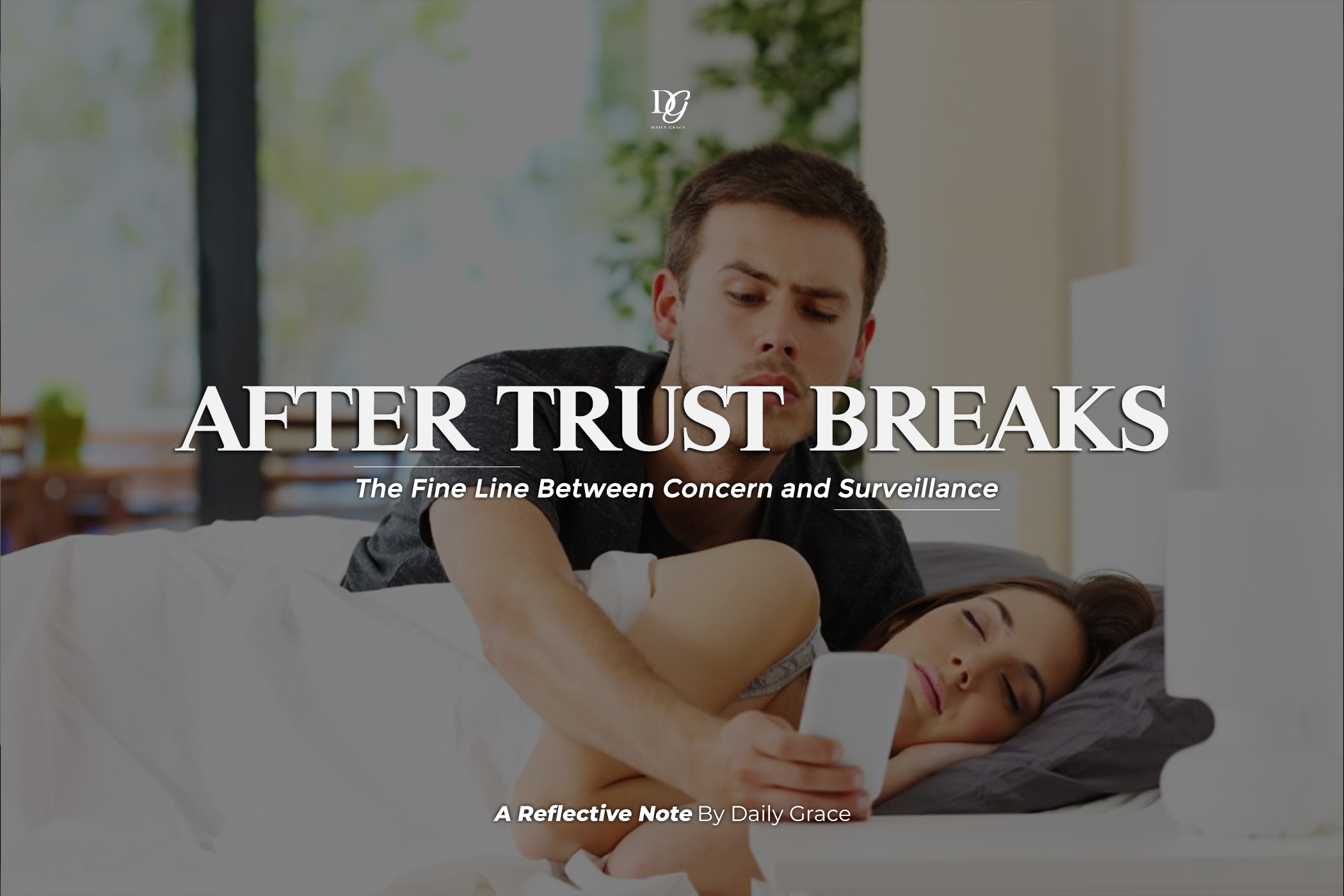
(The Fine Line Between Concern and Surveillance)
“On any normal day, my lady and I would text or call to check on each other. She has always been a little extra, but I didn’t think much of it. Recently, though, I made a regrettable mistake. She came across a WhatsApp conversation with a woman I had been flirting with at my office.
I apologised and she forgave me, and I genuinely thought we had moved on. But since then, something has changed. She checks on me much more frequently, and honestly, it is becoming uncomfortable. Almost every hour, it is, ‘What are you doing now? Are you alone? Who is with you? Where have you gotten to?’
Sometimes it feels less like she is checking on me and more like she is policing me. And I understand why she is suspicious because I gave her a reason to be. But I don’t know how long this can continue. Can she really get over what happened and return to how we used to be without checking on my every move as though she is waiting for me to do something again? — Anonymous”
Reflection
I think there is something important hidden inside this story: he is uncomfortable with her monitoring, but her fear did not appear from thin air. Trust was broken before surveillance began. That distinction matters because it is easy to tell the suspicious partner, “You need to stop checking,” without asking what made checking feel necessary in the first place.
When someone discovers that the person they trusted was capable of doing something they never expected, their mind can become hyper-alert. Suddenly, ordinary things acquire new meanings. A late reply feels suspicious. A changed routine feels suspicious. A phone turned face-down feels suspicious. The mind begins searching for evidence because it is trying to prevent itself from being hurt twice.
But there is a fine line between wanting reassurance and demanding constant access to someone’s movements. A concerned person will ask, “Are you okay?” The one surveilling would rather ask, “Prove where you are.” So, concern actually leaves room for an answer; surveillance keeps looking for another question.
Concern comes from care; surveillance can gradually become an attempt to control uncertainty. And uncertainty is difficult for the human mind. When we are afraid of losing someone, knowing everything they are doing can feel like safety. We start checking because checking briefly reduces the anxiety. Then the anxiety returns, so we check again. Before long, the behaviour that was supposed to calm us becomes the thing feeding our obsession.
This is one of the strange things about fixation: the more we try to control what frightens us, the more attention we give it. Someone who constantly checks a partner’s phone may actually become more consumed by the possibility of betrayal than they were before. Someone who repeatedly asks for reassurance may receive it and still need more tomorrow. The problem is no longer simply what the other person is doing. It becomes what fear is doing inside us. We begin outsourcing our peace to information that can never be complete.
That does not mean the person who was betrayed should simply ‘trust again’ because an apology was offered. Trust is not a switch. Sometimes the person who caused the wound wants forgiveness to mean immediate normality, while the wounded person needs time, consistency and changed behaviour before their nervous system feels safe again.
If you broke someone’s trust, you may have to tolerate some discomfort while they heal. Rebuilding trust may require transparency, patience and accountability. But there must also be a point where rebuilding begins to look different from policing. Otherwise, the relationship can become a strange prison where one person is permanently on trial and the other is permanently investigating.
And perhaps this is where both people have something to confront. The person who caused the wound must stop demanding trust they have not yet earned. The person who was wounded must be careful not to turn their pain into a permanent licence to control another human being.
One must learn consistency; the other must gradually learn discernment. Neither is easy but both require maturity. Because love cannot survive indefinitely on suspicion, just as it cannot survive on repeated betrayal.
A healthier response begins with replacing endless monitoring with meaningful conversations and observable boundaries. Sometimes the most loving thing we can do for ourselves is acknowledge that surveillance cannot manufacture safety.
©️ No Copyright infringement intended.
Share your obsession-related story with us at https://www.secretmessage.link/secret/6ac369335ac45/ , and we may reflect on it to help others learn from your experience.
If you liked this content, kindly donate to support Daily Grace projects – Merchant ID: 651707 / 0596301314 (Daily Grace). Visit https://teamdailygrace.com/projects to find out more on DG Projects.
PS: Kindly Follow our WhatsApp Channel for more engaging content.


Leave a Reply