
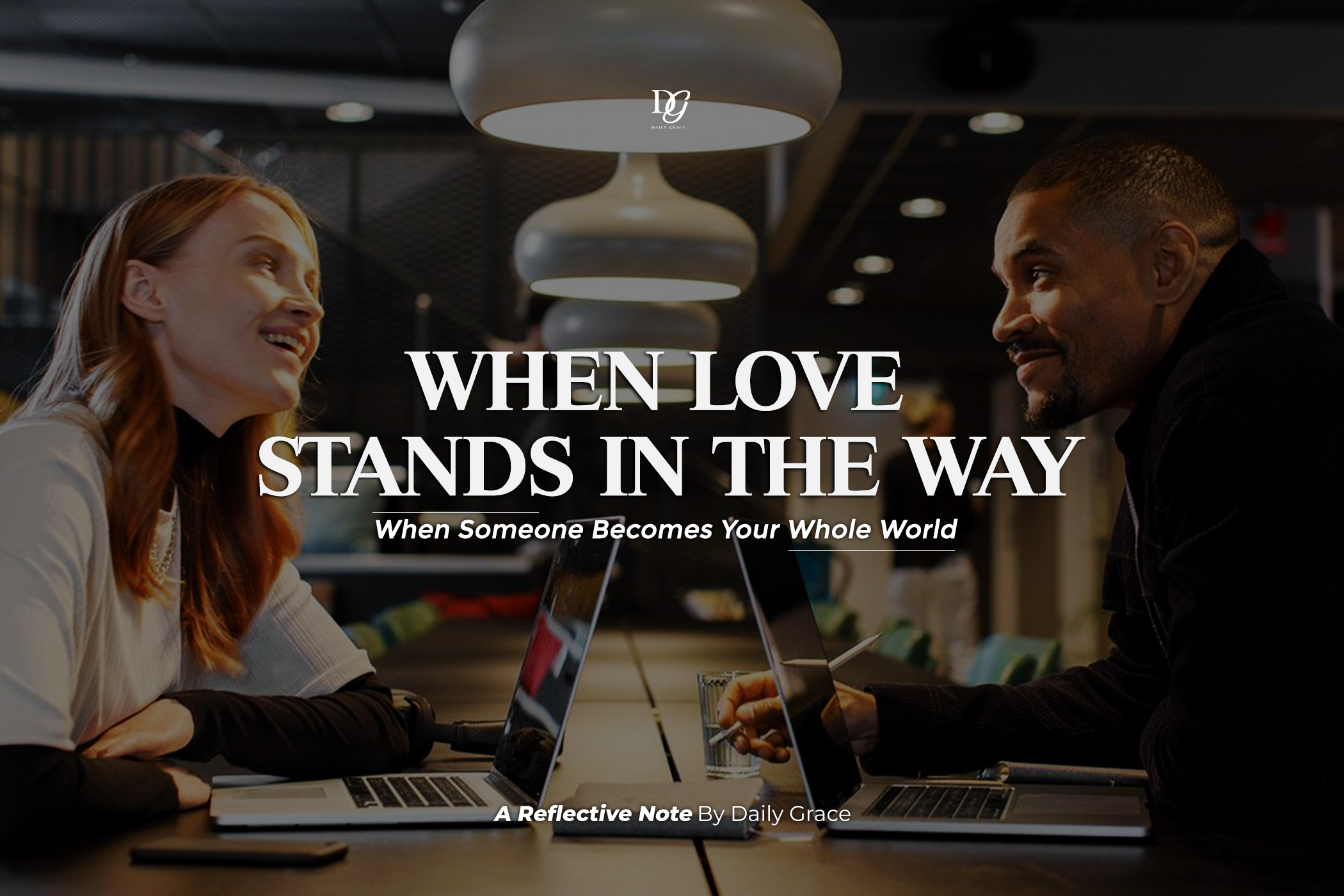
(When Someone Becomes Your Whole World )
“I met a very beautiful lady at work. She had come to the office to drop some documents for a colleague, and somehow, I got her number. We started texting. She was classy and intelligent, and I wanted to know her beyond the occasional conversations, so I took her out to dinner.
We talked for quite a while until she mentioned her previous relationship. According to her, her ex broke up with her because he hated how much she loved him.
I found that strange. I told her I had never heard anyone describe a breakup that way. She laughed and said, ‘Don’t mind him. He was lucky to have someone like me. I was always calling, texting, checking up on him and making sure he was okay.’ Then she paused and added, ‘Maybe I cared too much.’
I tried to defend her. ‘Or maybe he just didn’t love you as much,’ I said. Later, I asked her what makes her happy. Her answer stayed with me: ‘Spending time with my man.’
When I got home, I started thinking about everything she had told me. What if she had become emotionally dependent on her ex? Why was she always the one calling and checking up? I like this lady, but now I am wondering what else I should look out for before taking things further. Am I seeing a genuine desire for closeness, or something deeper?” – Anonymous
Reflection
I think there is something important to notice before we rush to answer his question: being deeply caring is not evidence of emotional dependence. Calling someone often, wanting to spend time together, checking on them or finding happiness in their company can simply mean that she loves connection.
Some people are naturally more expressive than others. A relationship can also have seasons when one person needs more support. So we should be careful about turning someone’s affection into a diagnosis simply because their style of loving makes us uncomfortable.
But his question opens a much deeper conversation. Sometimes a person does not merely love someone; they gradually make that person the centre around which their emotional life revolves. Their partner becomes their primary source of happiness, reassurance, identity, validation and security.
Their mood depends heavily on whether the person called, replied, visited, sounded affectionate or seemed distant. Their world begins to shrink, not because they were told to abandon everything else, but because one relationship slowly becomes everything.
That is where love can become difficult to distinguish from dependence. The issue is not, How much do you love this person? The better question is, What happens to you when this person is unavailable? Can you still enjoy your day when they are busy? Can you maintain friendships, interests, responsibilities and personal goals without feeling neglected?
Can you tolerate a delayed response without immediately imagining rejection? Can you disagree without fearing that the relationship is ending? Can you love someone deeply without needing their constant attention to feel secure?
A person may constantly check in because they genuinely care, but they may also be checking because silence frightens them. They may want to know where their partner is because closeness feels good, but sometimes the deeper need is reassurance: Are we still okay? Do you still love me? Have you found someone else? Am I enough? The behaviour may look like love on the surface while fear is quietly driving it underneath.
And this is where we need to confront something uncomfortable: you can love someone and still use them emotionally. Not deliberately or maliciously. But when another person becomes responsible for keeping you happy, calming your insecurity, validating your worth, rescuing you from loneliness and giving your life meaning, the relationship carries a burden it was never designed to carry. Your partner becomes less of a person you share life with and more of a system you depend on to regulate your emotions.
Healthy love does not require emotional starvation, but it does require emotional breadth. You should have somewhere else to place your joy. This does not make your partner less important. In fact, it allows you to love them without turning them into your entire emotional infrastructure.
Perhaps this is also why some people struggle terribly when relationships end. They are not only grieving a person; they are suddenly confronted with the disappearance of the routines, identity, social world, validation and emotional security that had been attached to that person. The heartbreak becomes heavier because they have lost more than a relationship. They have lost the centre around which they had organised themselves.
So if you are wondering whether you love someone deeply or have become emotionally dependent on them, don’t begin by counting how many times you call or text. Look at what the relationship is doing to the rest of your life. Is your world becoming richer because you love this person, or smaller because you cannot function without them? Are you choosing closeness, or desperately trying to prevent distance? Are you sharing your life with them, or slowly handing your life over to them?
The healthiest form of love is not “You are my whole world.” It is, “You are deeply important to my world” That distinction can protect both people. It allows affection without possession, closeness without suffocation, commitment without disappearance, and vulnerability without surrendering your entire identity.
©️ No Copyright infringement intended.
Share your obsession-related story with us at https://www.secretmessage.link/secret/6ac369335ac45/ , and we may reflect on it to help others learn from your experience.
If you liked this content, kindly donate to support Daily Grace projects – Merchant ID: 651707 / 0596301314 (Daily Grace). Visit https://teamdailygrace.com/projects to find out more on DG Projects.
PS: Kindly Follow our WhatsApp Channel for more engaging content.
Leave a Reply