
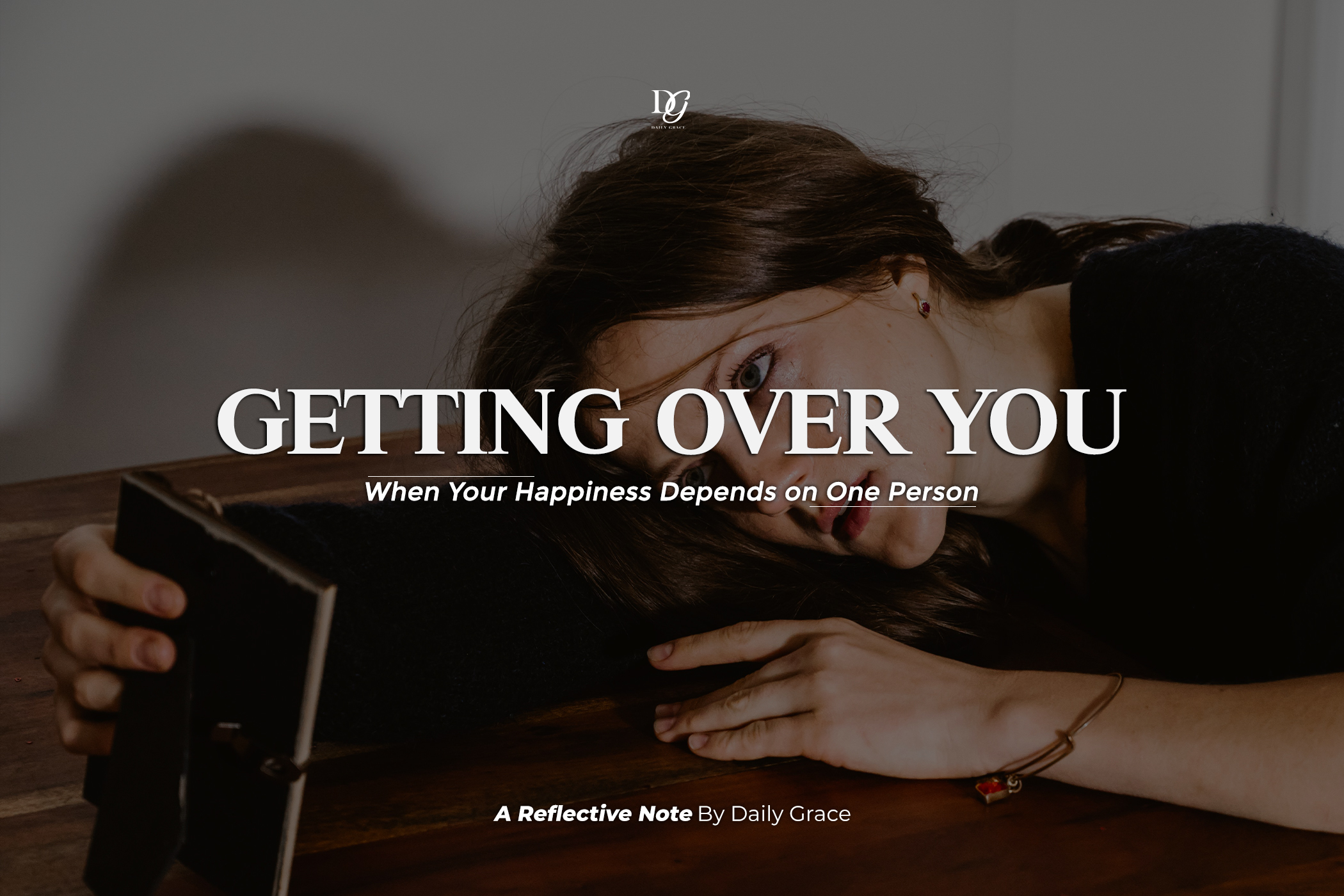
(When Your Happiness Depends on One Person)
“I honestly do not understand my aunt anymore. She is my mother’s younger sister, and after only one year of marriage, she divorced her husband when she discovered that he was still having an affair with his ex-girlfriend. I thought the divorce would eventually help her heal. Instead, she seems trapped in the heartbreak.
She drinks to stupor. She has struggled to move on. And now her ex-husband has complained to my grandparents that he has seen her vehicle parked in front of his house several times. He says he feels she is monitoring him and that it makes him uncomfortable.
What confuses me most is that my aunt is still young and beautiful. She could meet other people. She could rebuild her life. But somehow, she seems to have made this one man the centre of everything. Sometimes I wonder whether she still loves him or whether she simply cannot accept that the person she built her life around is no longer part of it. Everyone is struggling to help her and watching her drown herself in a relationship that already ended is painful.” – Anonymous
Reflection
I think what troubles the niece is something many of us struggle to understand until we experience it ourselves: sometimes we do not remain attached to a person because they are good for us. We remain attached because our mind has not yet accepted the life that exists without them.
A relationship can end physically long before it ends psychologically. The person leaves the house, but remains in our thoughts, routines, expectations, anger and imagination. We keep checking, remembering, monitoring and wondering because some part of us is still waiting for an ending that feels emotionally complete.
That is where attachment can quietly become obsession. We love someone, they become familiar, we share plans, routines and private parts of ourselves with them, and gradually they become one of the places from which we derive comfort, validation and belonging.
The danger comes when one person stops being part of our happiness and becomes the condition for it. Then their attention determines our mood. Their silence becomes rejection. Their absence becomes emptiness. Their happiness without us feels like an insult. Their new relationship feels like a personal loss. We are no longer simply missing someone; we are struggling to experience ourselves as whole without them.
And beneath that fixation, there is often more than love. There may be fear of admitting that the years of emotional investment did not produce the future we imagined. Sometimes we are not chasing the person anymore; we are chasing the version of ourselves we believed we were when we were with them.
This is why telling someone to just move on can sound almost cruel. Healing requires more than removing a person from your phone. It requires rebuilding an identity, routine, confidence and sense of possibility that may have become intertwined with that person.
Monitoring an ex does not create closure. Repeatedly checking their social media does not restore the relationship. Drinking away the pain does not heal the wound; it simply gives the wound another way to damage you. At some point, what began as heartbreak can become a pattern that keeps the heartbreak alive.
You can grieve what happened without continually revisiting it. You can acknowledge that someone mattered without allowing their current choices to determine your worth.
A healthy relationship should enrich your emotional world, not become its entire infrastructure. Your partner can comfort you, but they should not be your only source of comfort. They can make you happy, but they should not carry the entire responsibility for your happiness. They can be deeply important to you without becoming the person upon whom your entire identity depends.
Should they ever leave, their decision to leave does not erase your value. Their decision to love someone else does not mean you were unlovable. Their happiness does not have to become your punishment. You cannot control another person’s choices, only the meaning you give those choices and what you do with your life afterwards.
So I believe the niece’s question deserves a gentler answer. Her aunt may not simply be obsessed with her ex-husband. She may be struggling to imagine herself beyond the emotional world she built around him. And that is something worth treating with compassion, while still encouraging her to return to herself.
To my reader, love deeply, but do not surrender ownership of your emotional life. Let people matter to you without making them responsible for your ability to be whole. And when someone leaves, be charitable enough to let them leave and compassionate enough to help yourself come home
©️ No Copyright infringement intended.
Share your obsession-related story with us at https://www.secretmessage.link/secret/6ac369335ac45/ , and we may reflect on it to help others learn from your experience.
If you liked this content, kindly donate to support Daily Grace projects – Merchant ID: 651707 / 0596301314 (Daily Grace). Visit https://teamdailygrace.com/projects to find out more on DG Projects.
PS: Kindly Follow our WhatsApp Channel for more engaging content.
Leave a Reply