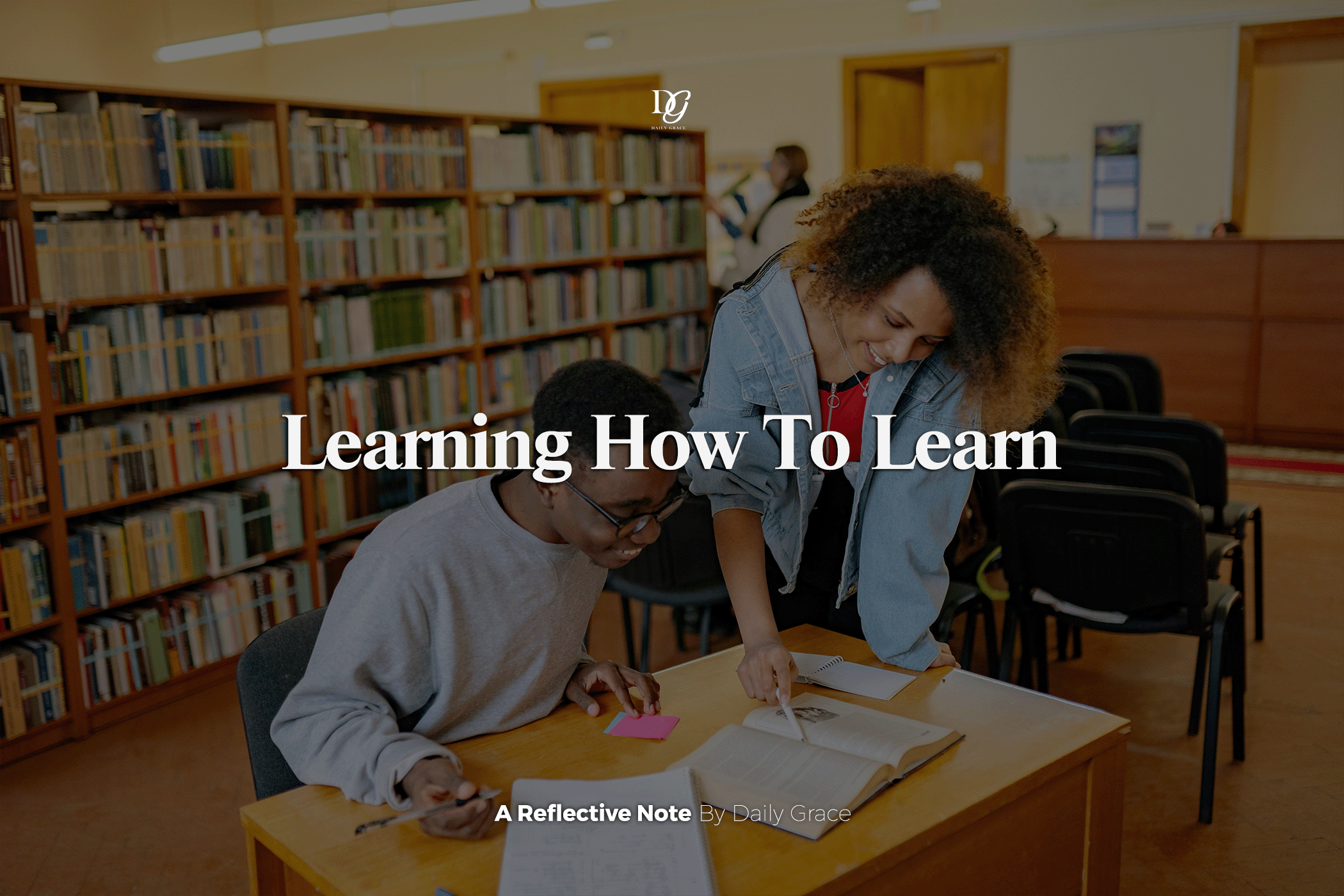
Learning is a skill before it is a privilege. Some of the most capable people in the world were not those with the most resources, but those who mastered how to learn with what they had. Smart growth begins when you stop waiting for better conditions and start extracting value from your current ones.
Learning is not solely about gathering information; it involves training your mind to notice, connect, and apply. A person can sit in a well-equipped classroom and remain unchanged, while another can listen to a simple conversation, reflect deeply, and grow. The difference is not exposure—it is engagement. When you learn how to learn, every environment becomes a classroom.
In constrained environments, curiosity becomes your greatest asset. Instead of asking “What do I have?”, you begin to ask, “What can this teach me?” A broken system can teach problem-solving. Limited access can teach creativity. Repetition can teach mastery. Even failure, when examined honestly, becomes a form of instruction. This is what changes the narrative. You stop seeing inconveniences as blockades and start seeing them as stepping stones to greatness.
There is a practical rhythm to self-education that many overlook. First, observe—pay attention to how things work around you. Then, begin to interpret it. This is where you try to understand why they work that way. The next thing is application. Test your understanding in small, real situations. Finally, adjust based on what happens. This cycle is simple, but it is powerful. It turns passive exposure into active growth. Without this rhythm, knowledge remains abstract; with it, knowledge becomes ability.
You do not need many resources, but you do need consistency. Learning in a constrained environment often feels slow, and that can be discouraging sometimes. However, slow learning, when it is intentional, builds deeper roots. Someone who learns gradually, testing and refining along the way, often becomes more adaptable than someone who learns quickly without understanding. Depth, not speed, is what sustains long-term growth.
There is a crucial role small opportunities play here. A conversation with someone experienced, a task you have never done before, a problem that needs solving, among others are not interruptions; they are invitations to learn.
The person who leverages these moments grows steadily. Over time, they develop a kind of intelligence that cannot be easily taught in the four corners of a classroom because it was earned through lived experience.
People are naturally drawn to those who are growing, asking thoughtful questions, and improving. You may not have formal access, but curiosity and humility can open doors. When you show that you are willing to learn and apply, people are more inclined to guide you, share insights, or even create opportunities for you.
Building valuable skills in this way requires emotional discipline. There will be moments when you feel behind, underprepared, or overlooked. But comparison is a distraction that weakens focus.
Smart growth demands that you measure progress by who you were yesterday, not by who someone else is today. The goal is to improve, not to impress. And improvement compounds quietly until it becomes undeniable.
We learn with purpose. You may start by solving immediate problems, but as you grow, you begin to see patterns. You connect ideas, refine your thinking, and build a personal framework for understanding the world. This is where self-education becomes powerful. It is no longer just about acquiring knowledge, but about shaping how you think, decide, and act.
If you are not willing to learn, no one can help you, but if you are determined to learn, no one can stop you. This implies that once you have the desire to acquire knowledge and put in the efforts in doing so, things begin to align with your purpose. This is how it works : you learn something, along the way,you realize that what you learned is inaccurate. What do you do now? You begin to unlearn it and gradually relearn new and right things. Knowledge is progressive. That means what was ‘acceptable ’ yesterday could be ‘partially true’ today, or even obsolete tomorrow.
In our world today, with all the hustling and bustling, pressure from careers, family and friends, most people rarely have the luxury of time to sit in the classrooms to learn. Self – education has become the order of the day. It doesn’t replace formal education, but it creates a balance. The largest informal learning platform is YouTube. With the help of a smart phone or better still a laptop and a stable network, one could become well informed, by being determined, focused, and consistent in continuous learning.
Learning how to learn is one of the most liberating skills you can develop. It frees you from dependence on perfect conditions and places growth within your control. It turns limitation into training, and scarcity into focus. And over time, it transforms you into someone who does not just consume knowledge, but creates value from it.
©️ No Copyright infringement intended.
PS: Kindly Follow our Whatsapp Channel at for more engaging content.