Earlier today, I heard that Mr. Bernard Antwi Boasiako, popularly known as Chairman Wontumi, has been sentenced to 20 years imprisonment with hard labour, following his Samreboi trial. “On counts Four and Six, the court found Wontumi and Akonta Mining guilty of purposefully facilitating unlawful mining activities,” read the report.
As the news escalated, I overheard some people argue. One faction said the ruling was very harsh while the other asserted that the verdict was well deserving. A septuagenarian said, “Wontumi is like any other citizen of this country and what is good for the goose is good for the gander. If it was done to Agradaa, Wontumi shouldn’t be an exception. “
In the midst of the brouhaha, one young lady recounted how a hungry teenager was sentenced to 7 years imprisonment for stealing plantain to eat. She said, “If stealing plantain warrants 7 years imprisonment, then someone who engaged in illegal mining that poses a threat to our health deserves more than thrice that punishment.”
Immediately, I recalled an office I visited a few years ago, where an employee had mistakenly sent an important document to the wrong client. Within minutes, he was summoned into a glass- walled office where his trembling silhouette became visible to everyone outside. Eventually, he was dismissed.
Guess what? I happened to be in the same office recently. This time, a senior executive approved a costly decision that caused the company to lose thousands of cedis. Come to think of it, nobody reprimanded him, he was neither humiliated nor dismissed. Instead, the error was described as an ‘unfortunate oversight’ followed by discussion about what could be learned for the future.
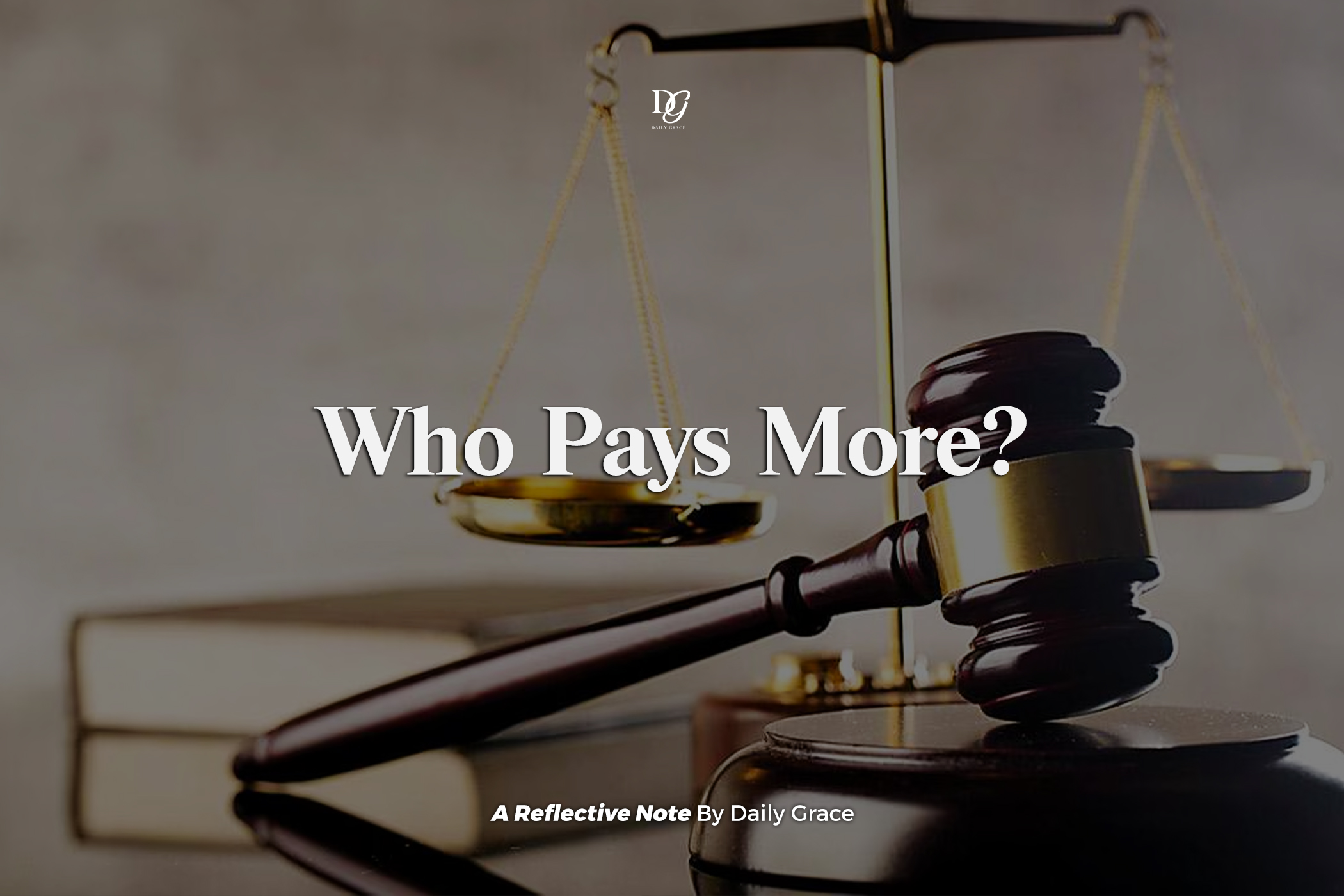
Two mistakes received different responses and decisions. Was the distinction the severity of the error or the status of the person who made it? So you see, folks, it’s obvious that many of our decisions are not weighed on balanced scales. They are weighed on scales already tilted by position, popularity, influence, wealth, relationships, or power. The same behaviour that is called confidence in one person becomes arrogance in another. Sometimes, one employee is labelled assertive whereas the other is tagged difficult for saying the very same thing.
I have, over the years, observed that we all have soft spots for some people to the extent that in our eyes such people do no wrong. This unequal judgment often emanates from invisible fears. We protect influential people because they seem valuable to our future. We become harsher toward those with fewer choices because we assume they can’t resist.
I have come to understand that perfect fairness may never exist in this imperfect world. Every workplace has hierarchies, every family has dynamics, and every relationship carries different responsibilities. However, we can still choose to become people whose scales are less influenced by status and more guided by integrity.
Today, before making a decision about anyone, I ask myself different questions. Would I respond the same way if someone else made this mistake? Am I reacting to the action or to the person’s position? Am I protecting truth or simply protecting comfort?
I am reminded that justice without compassion becomes cold, but compassion without fairness becomes partial. True dignity requires both. It asks me to correct people without humiliating them, to hold others accountable without stripping away their humanity, and to extend grace consistency rather than selectively.
©️ No Copyright infringement intended.
PS: Kindly Follow our WhatsApp Channel for more engaging content.