
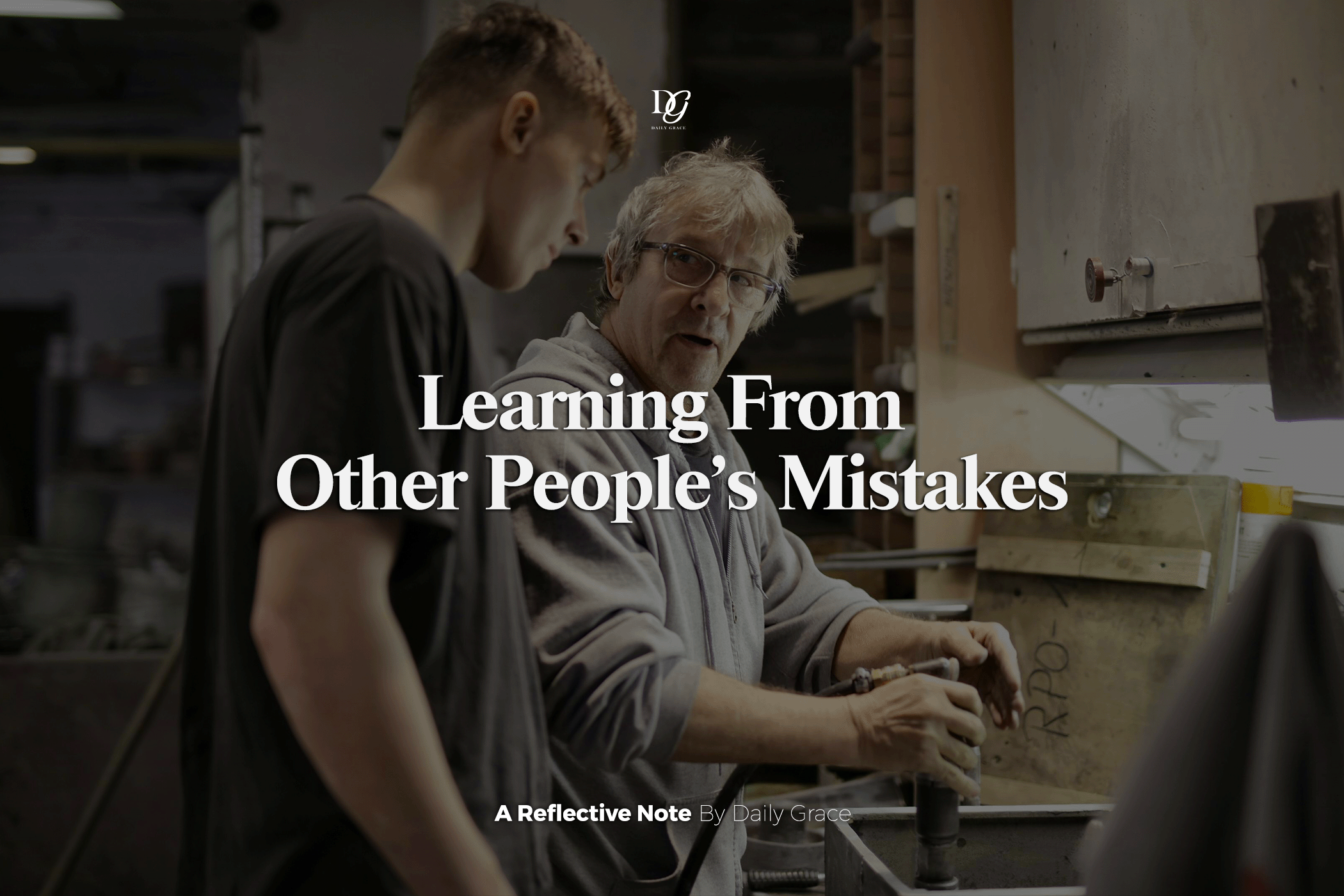
Many people are of the view that the only way to truly learn is through personal experience. While experience is a powerful teacher, it is also an expensive one. It often demands time, energy, resources, and sometimes comes with irreversible consequences.
Smart growth introduces a wiser path—the ability to learn from the mistakes of others. This is not imitation; it is observational intelligence. It allows you to gather lessons without paying the full price for them.
it is easy to think you need to try everything yourself to find direction, especially when things are not going as expected. The honest truth, however, is that the world is already full of patterns, outcomes, and examples. People have taken paths, made decisions, faced consequences, and left behind visible trails. In fact, there is nothing new under the Sun. Wherever you aim to go, some people have already been there. Whatever you desire to achieve, others have done so already. The pitfalls you are trying to avoid? Some fell into them and left footprints for your learning.
The question is whether you are paying attention. Observational intelligence begins when you start treating other people’s experiences as data, not just stories. Every failure you witness carries a lesson that can refine your own choices. Everything and everyone around you is a learning material. The good things are for our inspirations whereas the bad ones give us lessons.
When great people fall, don’t laugh; learn. Instead of judging people for their mistakes, begin to study them. Look beyond the surface and ask, “What led to this outcome?” Was it poor timing, lack of preparation, emotional decisions, or ignoring warning signs? This approach builds understanding rather than criticism. It turns everyday interactions into opportunities for insight.
You cannot afford to make every mistake yourself. The same ‘malaria’ that others recover from has also truncated many lives and destinies. Sometimes, even if you survive the repercussions of the experiences you have had, you become a pale shadow of your former ebullient self. Some, unfortunately, do not even make it all to tell their stories. It is therefore more wiser to sometimes, learn by observation than to learn from experience.
Time and opportunity are too precious. By observing others carefully, you can avoid common pitfalls and make more informed decisions. It is like walking a path where others have stumbled—you move more cautiously, not out of fear, but out of awareness.
A failed project, a broken relationship, a missed chance, for example, are not just isolated events; they are case studies. When you examine them closely, you begin to see patterns. Perhaps someone rushed into something without understanding, or neglected consistency, or overestimated their readiness. These patterns, once recognized, become guides for your own behavior.
Navigating systems and connections also becomes easier when you learn from others. You begin to understand what works and what does not within a particular environment. You notice how certain behaviors are rewarded while others are resisted. This awareness helps you move more strategically, avoiding unnecessary friction and positioning yourself more effectively.
Observational intelligence is not just about seeing what happened, but interpreting why it happened and how it applies to you. This requires humility—the willingness to admit that you could make the same mistakes if you are not careful. It also requires discipline to adjust your actions based on what you have learned.
Choosing your lessons wisely is the way forward. Some lessons are too costly to learn through personal experience. Observing people, things, and patterns allows you to gather those lessons at a distance. It sharpens your judgment, improves your decisions, and protects your progress.
In the end, wisdom is not just about what you have been through, but about what you have understood both from your own journey and from the journeys of others. When you learn to observe carefully and think deeply, you reduce unnecessary pain and increase intentional growth.
©️ No Copyright infringement intended.
PS: Kindly Follow our Whatsapp Channel at for more engaging content.