
Inspiring Change Every Day with Grace
Why Not Every Good Person Belongs in Your Life

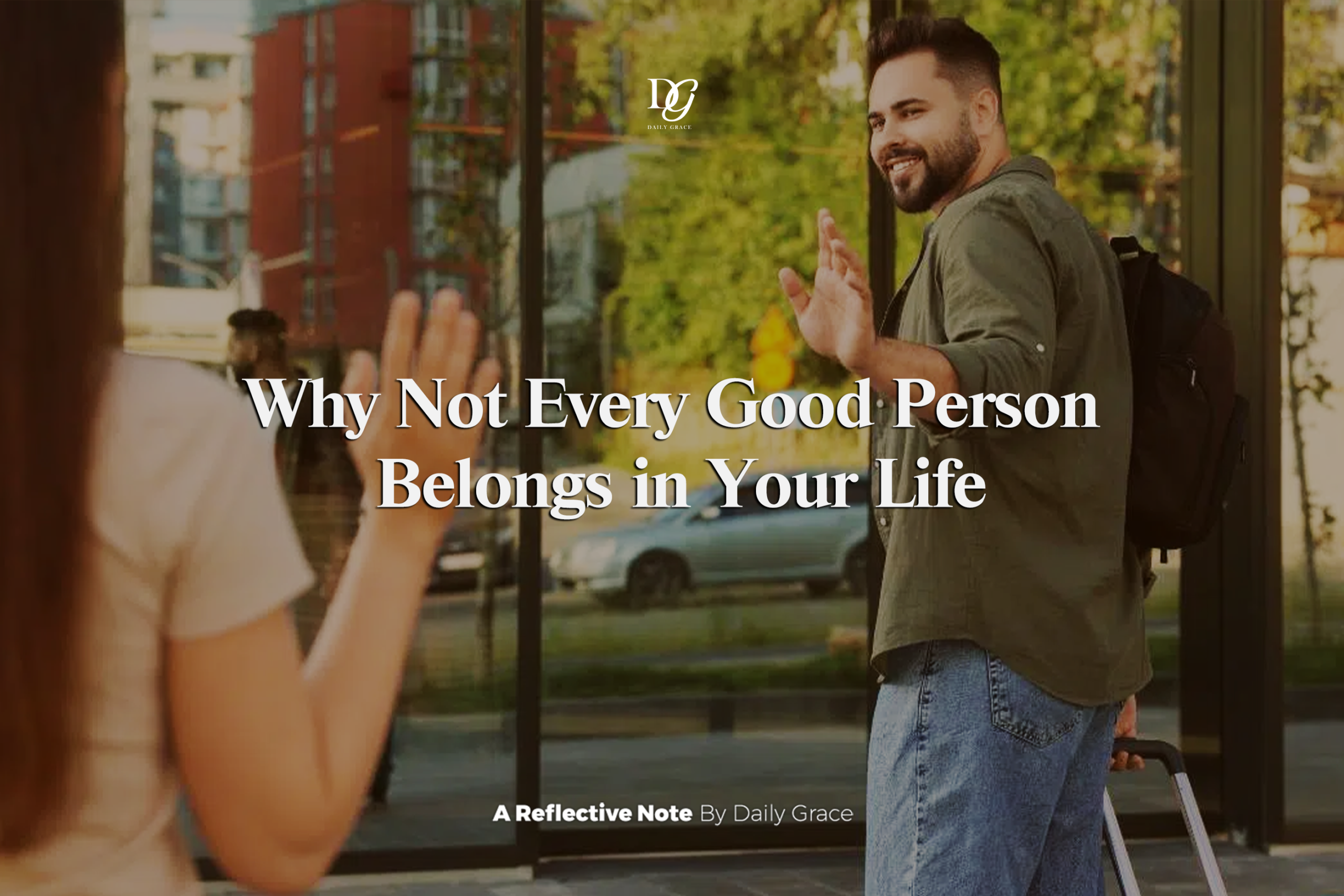
Like many people, I used to assume that if someone is kind, sincere, or well-intentioned, then the connection must naturally belong in my life for the long term. Growing up, one of the most difficult and uncomfortable truths I have come to agree with is that goodness alone is not enough to sustain a relationship.
Relational intelligence teaches a profound truth: goodness and compatibility are not the same thing. A person can be genuinely good and still not be the right fit for your journey. A fellow can have virtually all the virtues you look for in a partner but he or she may not be the right choice for your destiny and the fulfillment of your purpose.
This realization challenges a very human instinct and mostly feels very uncomfortable. As rational beings,we want relationships to be simple. We believe that if someone is a good person, we should keep them. In our quest to make things work out, we try harder, overlook certain misalignments, and convince ourselves that time will eventually perfect all things.
On the flip side, relational intelligence asks a different question altogether: not just Is this person good? But is this relationship healthy and aligned for where my life is going? Do we have a common interest or purpose? What else do I find in this person that can help my journey? These and many other honest queries help you to find clarity going forward.
Most of the time, many people confuse character with compatibility, but the modes of operations of these two are distinct. For instance, two people may both be generous, honest, and caring, yet still struggle deeply together. The fact that two people share similar characteristics doesn’t mean they are compatible.
On the other hand, their values may pull in different directions and their beliefs could be parallel. They may have different communication styles. Their priorities for life, growth, or responsibility may move at completely opposite routes. None of this makes either person bad. It simply connotes that the relationship may not be designed to thrive long term.
Imagine trying to fit two well-crafted puzzle pieces together. Each piece may be perfectly shaped and beautifully designed, but if their edges do not align, forcing them together will only create frustration no matter the very best and maximum efforts you put in.
The same principle operates in relationships. When compatibility is missing, people often spend enormous emotional energy trying to force harmony where natural alignment does not exist. Despite the inputs of one partner, he or she is usually met with quarrel, disrespect, ingratitude, or dishonour. This eventually breeds resentment.
Relational intelligence becomes essential here. It trains you to respect a person’s goodness while still being honest about the limitations of the relationship. Without this wisdom, people remain connected out of guilt, obligation or the fear of hurting someone who has done nothing wrong. They end up being drained and hurting themselves.
In our real-life relationships these shortcomings are often revealed through patterns. Conversations repeatedly circle the same misunderstandings. Efforts to grow together feel forced rather than natural. Decisions about the future bring tension rather than shared excitement.
Understand that letting go of a good person is not the same as rejecting their value. It is recognizing that relationships do not solely survive on kindness but also on alignment of vision, emotional maturity, pace of growth, and life direction. When these elements work together, connection becomes fulfilling rather than draining.
Developing relational intelligence means learning to evaluate relationships with both heart and wisdom. You observe how you feel after spending time with someone, pay attention to recurring emotional patterns, and ask whether the relationship consistently supports your growth, peace, and purpose. Healthy connections are built on cooperation.
The beauty of this wisdom is that it frees you from unnecessary guilt. You can honor people for who they are without forcing them to occupy spaces in your life that were never meant for them long term. Some relationships are seasonal teachers. Others are lifelong companions. Knowing the difference is one of the most valuable skills in emotional maturity.
Accepting this truth, your relationships begin to change. You invest more deeply in the people who genuinely align with your values and direction. You also release others with respect rather than resentment. And in doing so, you create room for relationships that truly support the person you are becoming.
©️ No Copyright infringement intended.PS: Kindly Follow our WhatsApp Channel at https://whatsapp.com/channel/0029VawUlQGBPzjQXzs6fX2Q for more engaging content.