
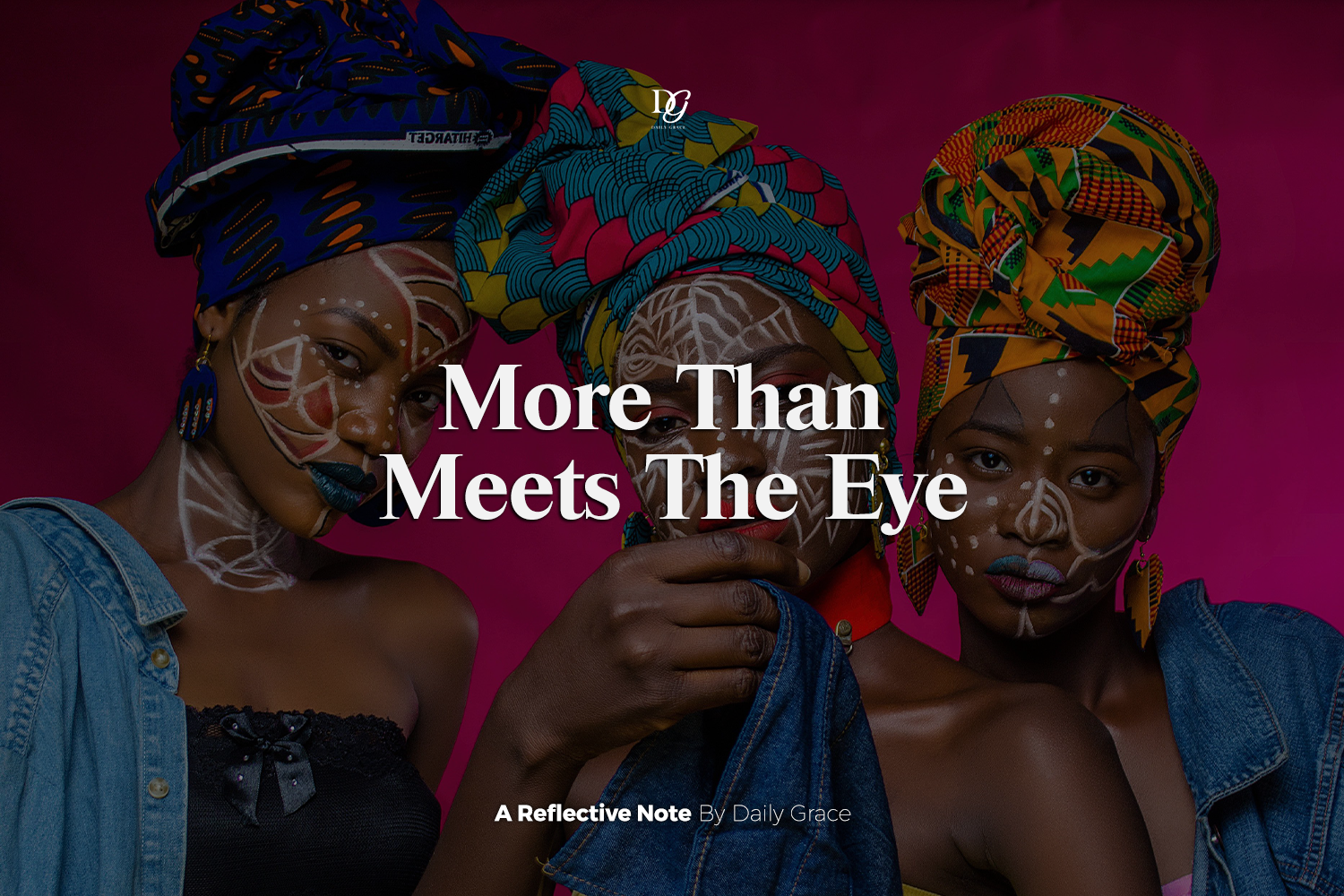
Recently, Sophia Alikija shared an AI-generated image of herself as a dark-skinned woman. She did this after some social media users suggested that much of her beauty came from her lighter complexion and that she would not have been considered as attractive had she been darker.
What stood out, however, was that the AI-generated image was just as striking and beautiful as the original. In fact, many people who saw both images agreed that her beauty transcended complexion. Yet the conversation that followed revealed something deeper than a discussion about one actress. It exposed a question many of us rarely stop to examine: Who taught us what beauty looks like?
Reading about that incident stirred a mixture of curiosity and concern. On one hand, it was encouraging to see a challenge to narrow definitions of attractiveness. On the other hand, it was unsettling to realise how quickly people attached beauty to skin tone, as though beauty itself were something that could be measured on a shade chart.
What made the situation significant was not the comments alone, but the confidence with which people expressed them. These were not isolated opinions. They reflected beliefs that have been repeated so often that they now feel like facts.
The more I reflected on it, the more I realised that many of us inherited our standards of beauty long before we were old enough to question them. We absorb them through television, movies, advertisements, magazines, social media feeds, and even casual family conversations. We hear which child is called fair and beautiful, which features are praised, which appearances are celebrated, and which are quietly overlooked. Over time, these messages settle into our minds and begin shaping how we see ourselves and others.
What makes this complex is that beauty standards are rarely created by one source. Global entertainment industries often exported specific ideals of attractiveness that became aspirational. Social media accelerated this process by turning beauty into a global competition, where millions compare themselves against carefully curated images every day. The result is that many people now carry standards they never consciously chose.
Yet it would be too simple to blame everything on foreign influence. Cultures have always had beauty preferences. Every society develops its own ideas about attractiveness, status, and desirability. The real issue is not whether standards exist, but whether we understand where they came from and whether they still deserve authority over us. Sometimes what we call personal preference is actually years of conditioning wearing a familiar face.
The impact of this conditioning can be profound. People spend money trying to alter their appearance. Some hide parts of themselves. Others carry quiet insecurities for years because they do not match an ideal they never created. In some cases, individuals begin evaluating their worth solely through the lens of appearance.
The Sophia Alikija story also reveals something hopeful. When people saw the darker version of her image and still recognised beauty, it challenged a long-standing assumption. It reminded us that beauty is often broader than the categories we create. Human beings have an extraordinary ability to appreciate different forms of attractiveness when we allow ourselves to see beyond inherited biases.
Perhaps the healthier response is not to reject all beauty standards or pretend appearance does not matter. Rather, it is to become more conscious of the influences shaping our perceptions. It is worth questioning what we automatically admire and why. It is to recognise that beauty is richer, more diverse, and more human than any trend, algorithm, or cultural preference can fully define.
©️ No Copyright infringement intended.
PS: Kindly Follow our Whatsapp Channel at for more engaging content.
Leave a Reply