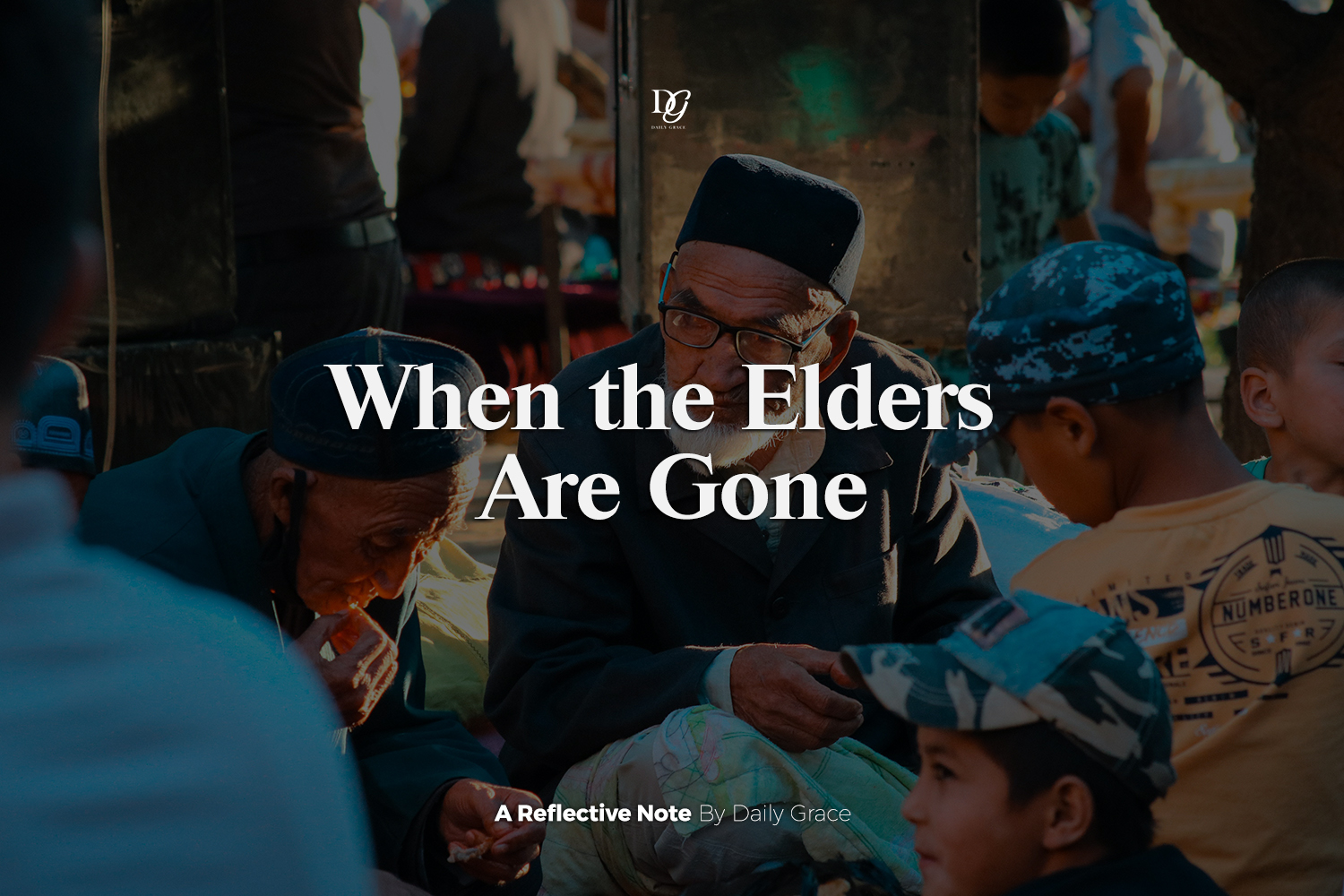
For the few times I’ve sat in family gatherings, I’ve heard my elders speak in proverbs and wise sayings. I’ve watched them settle disagreements with stories, teach lessons without sounding preachy, and carry themselves with confidence rooted in identity and experience.
I’ve seen them execute culture excellently. And I’ve always wondered: will there ever be elders like these when they’re no more? It appears the majority of the younger generation are disconnected from tradition and real culture. Most people don’t even know their tribes, clans, family histories, or the stories behind their names. And it’s worrying how much influence from the West through education, media, and even the church, is taking us further away from traditional culture.
Those moments often leave me with mixed emotions. Part of me feels admiration because I see a depth of wisdom that cannot be found in a textbook or downloaded from the internet. Another part feels concern because I wonder whether that wisdom is being transferred at all.
I look around at many young people, including myself at times, and notice how easily we can discuss global trends, foreign celebrities, and online debates, yet struggle to explain our own cultural practices, family histories, or traditional values. There is an uncomfortable feeling that something valuable is slipping through our fingers, often without us noticing.
This is significant because culture is more than festivals, clothing, food, or language. Culture is memory. It is the collection of stories, beliefs, values, and lessons that help people understand who they are and where they come from. When a society loses touch with these things, it risks losing part of its identity. People become connected to everything and rooted in nothing. They know what is trending globally but feel uncertain about their own foundations.
Historically, colonial systems, formal education structures, religious influences, urbanization, migration, and globalization all contributed to reshaping cultural priorities. In many cases, local knowledge was subtly presented as inferior while foreign ideas were presented as superior.
Over time, entire generations began measuring success, beauty, intelligence, and progress through borrowed standards.
Yet there is another side to this story. Sometimes cultural amnesia is not caused by young people rejecting tradition; it is caused by older generations failing to teach it meaningfully. Wisdom cannot survive on expectation alone. It must be explained, demonstrated, and made relevant. When traditions are presented as rules without context, many people abandon them. When stories are not told, they are forgotten. When values are not practiced, they lose their credibility.
The healthiest path forward may not be choosing between tradition and modernity. It may be learning how to hold both with wisdom. We can embrace useful innovations without abandoning identity. We can participate in a global world without becoming strangers to our roots. We can learn new ways of thinking while preserving the values that have sustained communities for generations. Adaptation should strengthen identity, not erase it.
The question, then, is not whether culture will change. It always will. The deeper question is whether we will be intentional about what we preserve, what we improve, and what we leave behind. Because every generation inherits more than land, names, and possessions. It inherits stories. And when those stories disappear, something larger than memory is lost.
Perhaps the goal is not to become exactly like our elders. But if future generations are ever to have elders who speak with wisdom and conviction, someone must first decide that these stories are worth remembering.
©️ No Copyright infringement intended.
PS: Kindly Follow our Whatsapp Channel at for more engaging content.