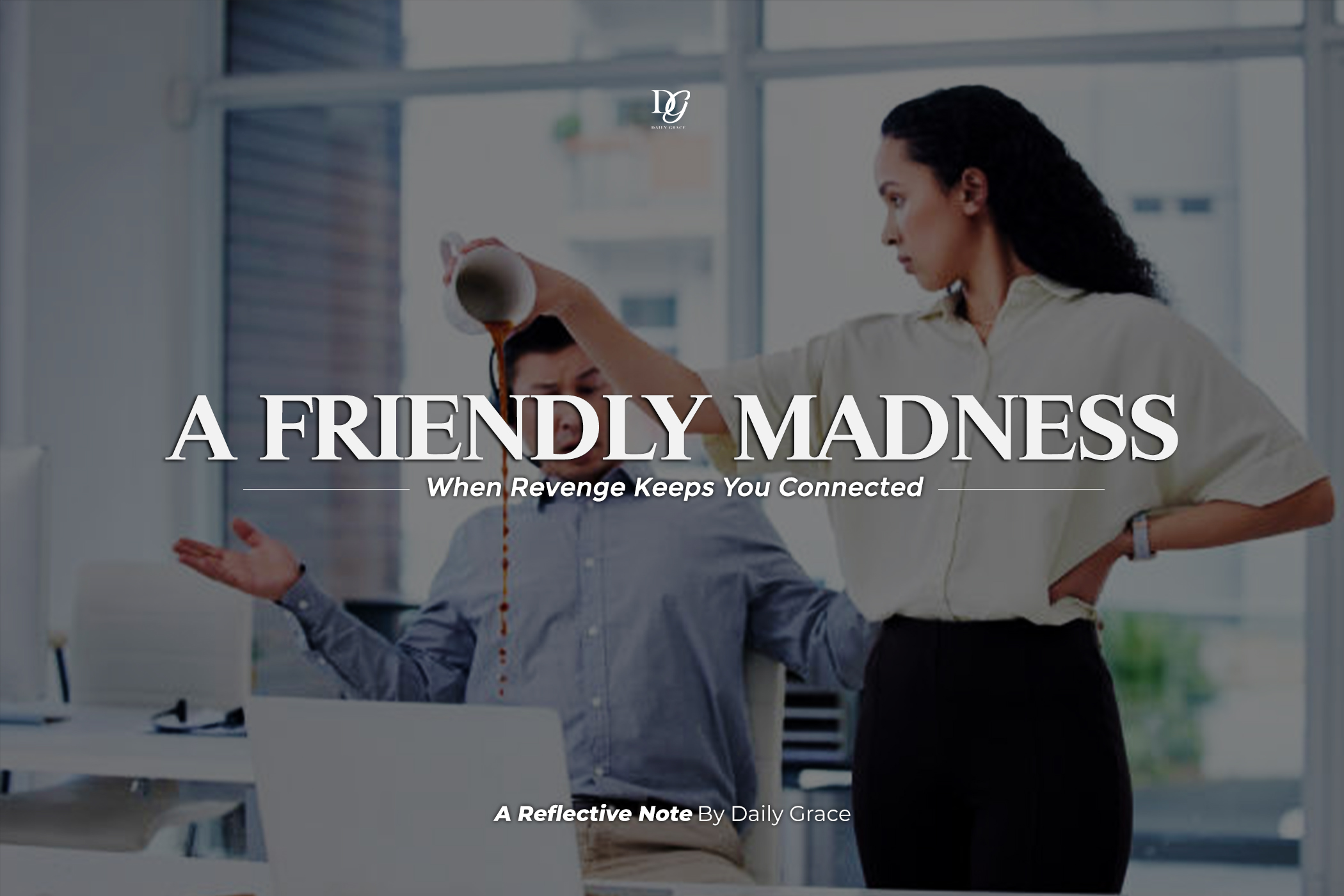
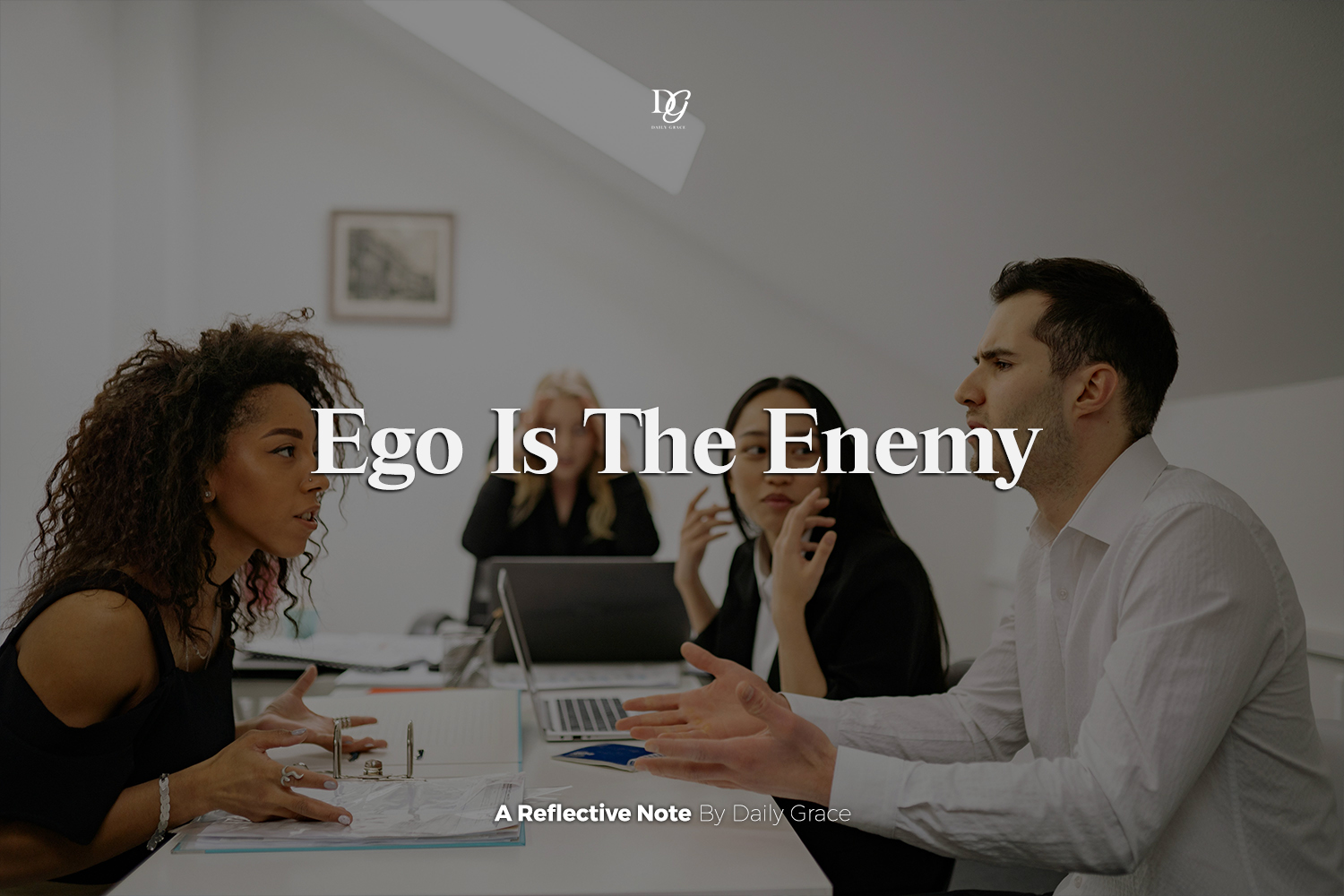
Many partnerships in business, ministry, friendships, and even family ventures begin on a good basis. Mutual respect, tolerance, honesty, care, among other virtues welcome the relationships. But, with time, the desire for power, fame, influence, money, and control drags ego into the equation.
Ego is not only about being loud or arrogant. There is also the subtle kind that hates correction, struggles to share or give credit where it is due, wants everything to revolve around one person, or secretly competes with the very people it claims to collaborate with. This, ladies and gentlemen, is the danger that ruins many strategic relationships along the way.
Many partnerships do not collapse because of lack of vision, but as a result of somebody’s pride. When one person always wants to be right, another would also want to be seen as more important. This sows a seed of discord coupled with power display, where everyone strives to ascertain their superiority over the other. At this point, the bond among the people involved begins to lose its strength and the complementary dynamics is affected. Gradually, what began with excitement turns into silent tension, emotional distance, and distrust.
Humility is the game-changer in strategic partnerships. We live in a dispensation where most people always want to “prove themselves”. Some think humility means silence or allowing people to walk over you. No! Meekness is not weakness. True humility is strength under control. It is the maturity to value the mission more than your personal image, the ability to tolerate different perspectives, and the forbearance of one another’s shortcomings.
Every team must have this understanding inculcated in them that another person’s brilliance does not reduce your own. Someone may have the vision to fly, but others may possess the wings. The wings may be access, influence, resources, or the ability to execute. Without these, the vision cannot come into fruition. In order for the vision to manifest, the wings must be borrowed. More than anything else, understand that no one truly flies alone.
In the same way, you could be good at packaging but not strong in sales. Another person may be good at sales yet lacks proper branding. The way to go is not to compete, but to collaborate and win together without feeling you are better than the other. This is true humility — the ability to acknowledge what you carry and the confidence to appreciate what you don’t have without feeling insecure. In strategic partnerships, humility is non- negotiable. Without it, even gifted people become difficult to build with.
Healthy partnerships require emotional discipline. Not every disagreement is an attack and not every correction is a sign of disrespect. Mature collaborators know how to separate ideas from identity.
For instance, if somebody challenges your approach, it does not mean they are questioning your worth. People are not right or wrong; they just have a different view of things. What you see as ‘6’ from your side is seen as ‘9’ from another angle. In this case, who is right or wrong? Well, the difference is the viewpoint, not truth per se.
One of the best decisions to make in strategic partnerships is to never try to win an argument. You know what, people? Any time you win an argument, you end up losing the very people you are building with. This is because no one wants to appear as a dunce or someone without requisite knowledge. Eventually, the vision, which is the most important reason for the collaboration, also suffers its own share of the disappointments.
The inability to celebrate other people’s growth is another hidden form of ego. Unfortunately, in some partnerships, one person secretly becomes uncomfortable when the other begins gaining recognition, influence, or opportunities. Instead of seeing it as collective progress, they interpret it as competition. This mindset destroys unity.
Now, imagine a church worker becoming resentful because another team member is more visible on stage. This reminds me of a program we had about two years ago. ‘Spoken Word’ was part of our activities. I wrote the content. Though I could perform it, I gave it to someone I considered to be blessed with the talent of theatre performance to do it. In the end, he gave me credit for the write-up, we had a warm embrace, and the program continued successfully.
Listen, when love leads, no one follows; we become fellows. The Sun, the moon, and the stars all have their season of appearing and time of shining. What do I mean by these sayings? Strategic people understand that visibility is not always equality of value. Some roles are public, others are foundational. A building may receive applause for its beauty, but nobody survives without the hidden pillars underground.
Above all, strong partnerships are built on honest conversations. One of the greatest acts of humility is the courage to admit mistakes quickly. People trust you more when you can acknowledge your faults and take actionable steps in correcting them. Every successful collaboration requires adaptation. If you cannot learn, adjust, apologize, or receive feedback, your talent will eventually become not worthy of working with.
The strongest collaborators are not always the loudest, richest, or smartest people in the room. Often, they are the ones mature enough to protect relationships while still protecting purpose.
©️ No Copyright infringement intended.
PS: Kindly Follow our Whatsapp Channel at for more engaging content.