
Inspiring Change Every Day with Grace
Releasing Relationships Without Villainizing People

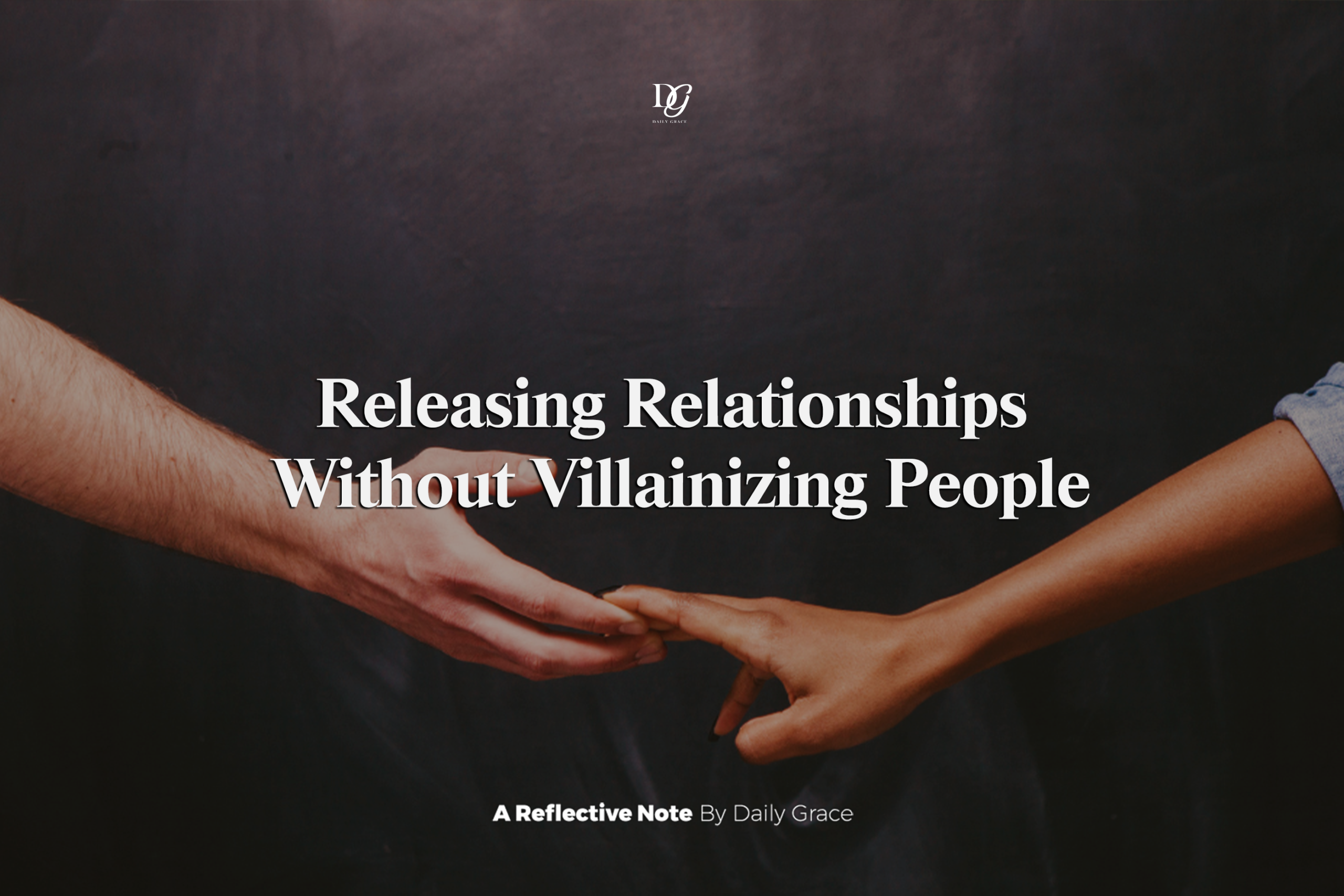
Oftentimes, most relationships end in bitterness because the people involved have not mastered the art of letting go without hate. We have to come to the realisation that if things don’t go as we wish, it doesn’t make either of the parties involved a bad person. Maturity is the ability to release a relationship without turning the other person into a villain.
Many endings are as a result of misalignment, timing, or emotional limitations. Whenever relationships end, there is often a strong temptation to rewrite the story in a way that justifies our exit. We magnify faults, reduce the person to their worst moments, paint pictures that make them seem cruel, we feel betrayed, and tell ourselves they were the problem.
Relational intelligence offers a different path—one rooted in truth, not distortion.The truth is, not every relationship ends because someone is bad. Some end because two people could not meet each other in the way that was needed. One may have lacked the emotional capacity. Another may have outgrown the connection.
Sometimes values begin to drift apart and efforts become one-sided. Communication reduces with time, making it difficult for understanding to prevail. Then, blame games set in. These realities are uncomfortable as they tend to curtail the stability of the relationship.
I have observed over the years that it is easier to let go when one is angry. Anger creates distance and gives you a sense of control. But the moment that anger begins to fade away, you are left with your true self. Here is when deeper things like grief, disappointment, and unfulfilled expectations show up.
Many people avoid this emotional depth by choosing resentment instead. However, relational intelligence reveals that healing built on distortion is fragile. If you have to misrepresent someone to move on, you have actually missed the mark. You begin to understand that making an enemy out of a relationship that didn’t stand the test of time is not worth it.
Now, consider how a chapter is closed in a book. You do not tear out the pages just because the story did not end the way you hoped. You acknowledge what was written, you understand its place in your journey, and you turn the page.
Likewise, releasing a relationship with maturity means allowing the person to remain human in your memory—flawed, yes, but not demonized. It means remembering and appreciating the fond memories you shared together without being bitter. Instead, you find appropriate ways of becoming better while sincerely wishing the other person well,too.
In real life, this can look like recognizing both the good and the limitations of a person at the same time. It implies saying, “This person had qualities I appreciated, but he or she could not meet me in the way I needed.”
It means understanding that someone can care about you and still not be capable of building a healthy relationship with you. These bitter truths demand emotional honesty, but they also bring clarity which, in turn, give you a deeper kind of peace.
Relational intelligence helps you to examine your own role without harsh self-judgment. This is where you notice that not every ending is solely about the other person. Maybe you ignored the signs for too long and the ‘wonders’ showed up eventually. It could be that you gave too much or asked too little. Growth begins when you can reflect without condemning yourself or the other person. That is where real transformation happens.
Here comes the game-changer : letting go with maturity protects your heart from unnecessary bitterness. When you villainize people, you carry emotional residue that affects future relationships. You become overprotective because you felt hurt in the past. You may end up also hurting people who are genuinely there to put smiles on your face. In fact, you may even struggle to trust again.
On the contrary, when you release with clarity and grace, you create space for new connections that are not weighed down by past failures. You heal rightly from the trauma, your soul is refreshed, and your heart becomes steady to love genuinely and be properly loved again.
This, notwithstanding, does not give room for entertaining harmful behavior or tolerating disrespect. Boundaries must be put in place. Then, practice forgiveness and forbearance. Forgiveness is releasing feelings of resentment towards someone who has offended you. Forbearance has to do with being patient with people even when provoked because it is likely to be offended again.
Even in situations where someone has hurt you, relational intelligence allows you to separate their actions from their entire identity. You can acknowledge the harm without reducing the person to it. That balance is where emotional freedom lives.
Over time, you begin to realize that how you end relationships is just as important as how you begin them. Endings handled with maturity shape your character. They influence how you carry yourself into future connections. They determine whether you move forward with wisdom or with wounds that have not fully healed.
In the end, releasing a relationship is not about proving who was right or wrong. It is about admitting the truth of what was, accepting what could not be sustained, and choosing peace over prolonged conflict within yourself.
©️ No Copyright infringement intended.PS: Kindly Follow our WhatsApp Channel at https://whatsapp.com/channel/0029VawUlQGBPzjQXzs6fX2Q for more engaging content.