There is something I have wrestled with for a long time whenever I come across photographs from some charitable events. I understand why they are taken. Organisations and individuals often need records to account for donations, report to partners, inspire others to give, or demonstrate transparency. Documentation has its place.
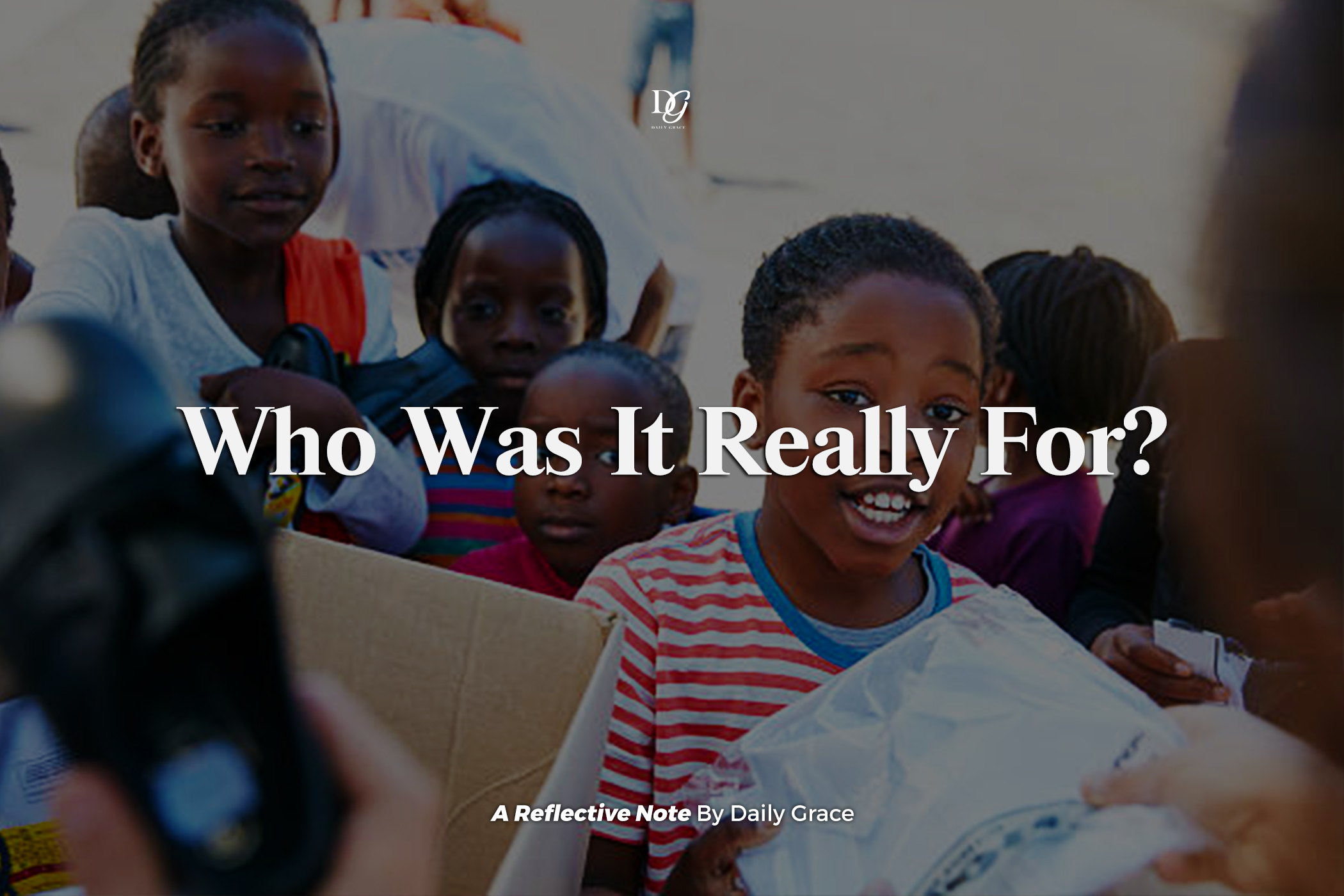
Yet, I cannot ignore the discomfort I sometimes feel when I see certain images published online. A child with torn clothes is photographed from every angle before receiving a meal. An elderly woman is asked to hold up a bag of food while strangers take pictures. A struggling family stands in front of a camera with faces that quietly reveal embarrassment more than gratitude.
It feels like the picture captured their vulnerability rather than the generosity intended. And we must understand that charity is not only about what is given. It is also about what the recipient is left feeling after receiving it.
I have come to believe that it is possible to meet someone’s physical need while unintentionally wounding their dignity. Help can fill an empty stomach and still leave an empty heart if it communicates, ‘You are an object of pity,’ instead of, ‘You are a person of worth.’
Perhaps the challenge is not always bad intention. Many people genuinely want to help. Some are simply following common practice. Others believe that visible evidence encourages accountability and inspires more support.
These are reasonable goals. But good intentions do not automatically produce good outcomes. Sometimes, in our eagerness to show compassion, we forget that the person receiving our kindness has a story, a reputation, and a deep desire to be seen as more than their moment of need.
If my kindness requires another person’s humiliation to be recognised, then perhaps I have misunderstood the true purpose of kindness. I now believe that sometimes we need to ask for consent before taking photographs. Sometimes it means photographing the event rather than identifiable faces. Sometimes it means telling stories of impact without exposing identities.
The irony is that the greatest acts of goodwill are often the quietest ones. They leave people stronger, not smaller. That is the kind of charity I hope we practise, the kind that feeds the hungry without starving their dignity.
As I continue to learn what goodwill truly means, I am convinced that kindness should never cost someone their self-respect. Whenever we have the opportunity to help, our generosity must leave behind more than relief. It should leave behind honour. Because when charity protects dignity, it does more than solve a problem, it reminds a person that they are still worthy of being seen, respected, and loved.
Ready to turn goodwill into action?
Tap on the link https://teamdailygrace.com/projects to partner with us and support Daily Grace community projects.
©️ No Copyright infringement intended.
PS: Kindly Follow our WhatsApp Channel for more engaging content.