
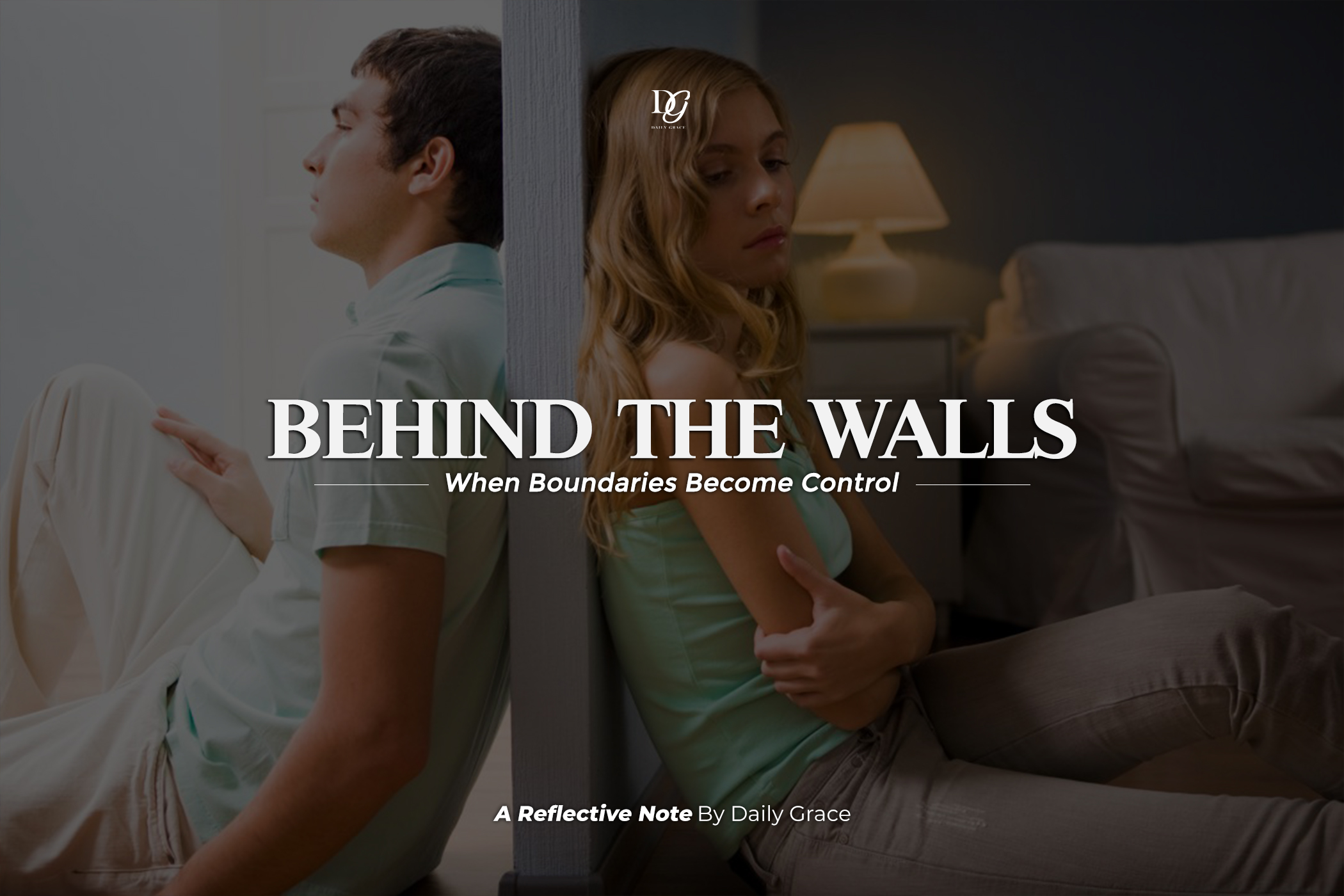
(When Boundaries Become Control)
It’s funny how we want the freedom to make our own choices, yet we get uncomfortable when the people we love exercise that same freedom in ways we dislike. We want to be trusted, understood, and accepted, but we may struggle to offer others the same courtesy when their decisions challenge our expectations.
So we create rules, make demands, withdraw affection, or insist that certain things must happen our way. Sometimes, we call this having boundaries. But what if some of the boundaries we proudly defend are actually attempts to control other people?
I think this confusion deserves more attention. Control does not always come from a desire to hurt someone. Sometimes, it grows from genuine affection, past disappointments, fear of betrayal, or the desperate need to feel safe. When we have been hurt before, we may become determined never to feel that pain again. So we start anticipating every possible disappointment and try to prevent it.
We want to know who someone talks to, how they spend their time, what decisions they make, and why they choose differently from us. We tell ourselves that we are protecting the relationship, when we may actually be trying to protect ourselves from the uncertainty that comes with loving another human being.
A boundary is a decision about what you will accept, what you will participate in, and what action you will take to protect your well-being. Control is an attempt to dictate what another person must do to satisfy your expectations or relieve your discomfort.
If you decide not to remain in a relationship where you are repeatedly disrespected, you are setting a boundary. But if you tell the other person to behave exactly as you expect, or you will make them regret it then you’re exercising control over that person. A boundary gives you responsibility for your choices. Control attempts to make someone else responsible for your feelings by requiring them to behave in ways that keep you comfortable.
It is like turning your discomfort into unquestionable ownership of another person’s choices. You are entitled to decide what you will live with; you are not automatically entitled to decide how everyone else must live.
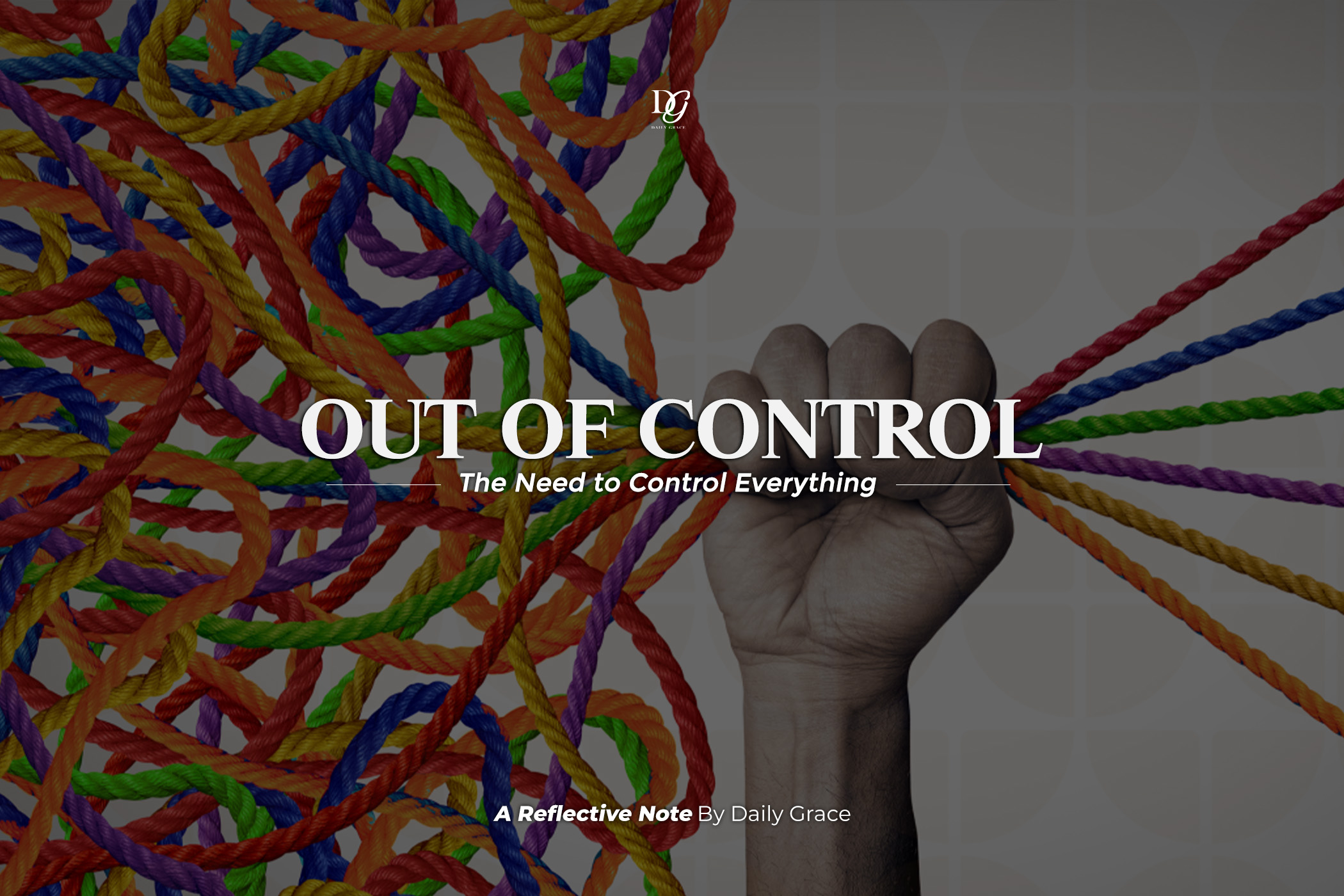
Obsession makes this distinction particularly difficult because it magnifies whatever we fear losing. When we become excessively attached to a person, an outcome, or even an idea of how life should be, we may begin to treat uncertainty as a threat that must be eliminated.
We want guarantees that nobody can give us. We want reassurance that never runs out, loyalty that never needs to be discussed, and relationships in which we never have to confront the possibility of disappointment. Gradually, our desire for security can become a demand for control.
But another person’s willingness to disagree with us does not necessarily mean they do not love us. Their need for privacy is not automatically secrecy. Their independence is not necessarily rejection. Their different opinion is not always disrespect.
None of this means we should tolerate mistreatment or remain in situations that compromise our dignity. Healthy boundaries can be firm. You can refuse insults, dishonesty, manipulation, and repeated violations of your values. You can decide that certain behaviour makes a relationship impossible for you to continue. You can protect your time, privacy, finances, body, and emotional wellbeing. The crucial difference is that you take responsibility for what you will do. You communicate your limits clearly, allow the other person to make their decision, and accept that their decision may require you to make a difficult one of your own. You do not need to control someone to establish that you have standards.
Ultimately, I believe that you can love someone without controlling their decisions. You can disagree without demeaning them. You can establish limits without threatening their freedom. And you can walk away from a situation that harms you without making it your mission to punish the person who chose differently.
©️ No Copyright infringement intended.
Share your obsession-related story with us at https://www.secretmessage.link/secret/6ac369335ac45/ , and we may reflect on it to help others learn from your experience.
If you liked this content, kindly donate to support Daily Grace projects – Merchant ID: 651707 / 0596301314 (Daily Grace). Visit https://teamdailygrace.com/projects to find out more on DG Projects.
PS: Kindly Follow our WhatsApp Channel for more engaging content.
Leave a Reply