
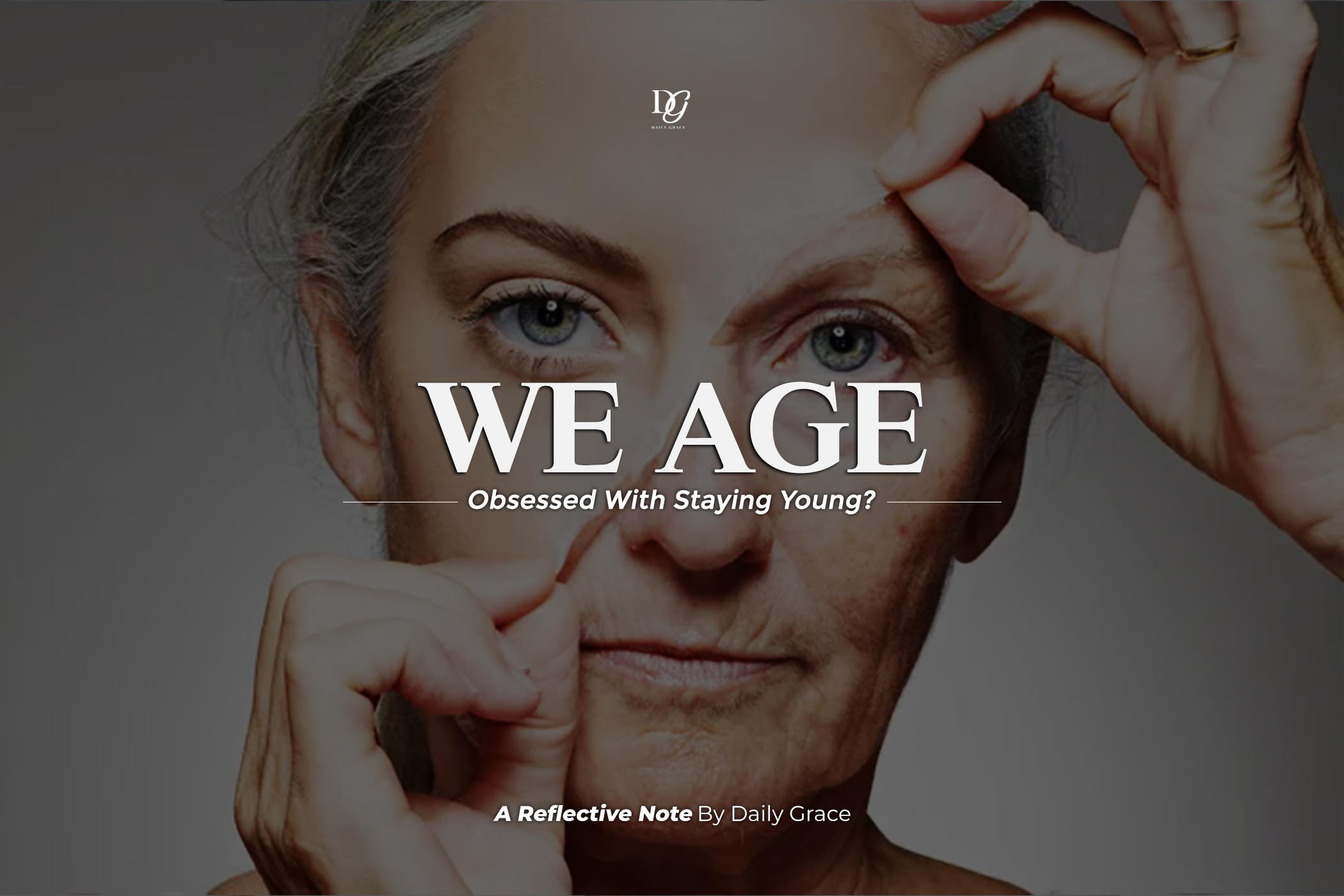
(Obsessed With Staying Young?)
“People find it hard to believe when I show them my mom. She is thirty years older than me, but she looks so young and beautiful. At her age, people still compliment her. I can’t count the number of times I’ve been told she’s more beautiful than I am.
To be honest, I have considered getting cosmetic care or a procedure since I can afford it. But I am also afraid. What if something goes wrong? What if I do one procedure and then feel like I need another? I have watched enough episodes of Botched to know how easily the pursuit of looking better can turn into something much bigger.
Yet, sometimes I wonder whether I actually want to improve my appearance or whether I am becoming afraid of ageing.” – Anonymous
Reflection
I believe this lady is wrestling with comparison, expectations and the uncomfortable realisation that beauty has become something she feels she must compete for. Her mother had unintentionally become a standard against which she measured herself.
I think many of us understand this more than we admit. We see someone with flawless skin and begin examining ourselves. We notice a new line around our eyes and suddenly feel that time is betraying us. We see celebrities who appear to age backwards, influencers documenting procedures as casually as haircuts, and advertisements promising to restore what nature has taken. Gradually, ageing stops being a natural process and starts feeling like a personal failure we must correct.
There is nothing wrong with wanting to look good. Caring for your skin, exercising, dressing well, eating properly, treating a medical condition or choosing a cosmetic procedure can all be legitimate forms of self-care. The problem begins when appearance stops being something we care for and becomes something we cannot stop fixing.
When one procedure leads to another because the previous version of ourselves suddenly looks unacceptable. When mirrors become judges. When compliments provide temporary relief but never lasting satisfaction. When we begin spending disproportionate amounts of money, time and emotional energy trying to negotiate with a reality that every human being eventually faces: we age.
What makes this particularly complicated is that the beauty industry does not merely sell products; it can sell a fear. The fear of looking old or becoming less attractive. The fear of losing desirability, relevance or social attention. And because these fears are deeply human, they can be remarkably profitable.
We are shown carefully edited faces, carefully managed bodies and carefully concealed signs of ageing, then encouraged to regard our ordinary human appearance as a problem requiring intervention. The more insecure we become, the more solutions we are offered.
If I believe that my worth rises and falls with how attractive I look, then there will never be a final procedure that completely satisfies me. There will always be someone younger, smoother, slimmer, more symmetrical or more conventionally attractive. If the procedure is being asked to heal an insecurity that lives much deeper than the skin, the satisfaction may not last.
The anonymous writer’s fear of wanting more after one procedure is therefore worth taking seriously. Obsession often grows through small permissions. Just this one thing. Then another, then another. The goalpost quietly moves. What once seemed beautiful becomes ordinary, and what once seemed unnecessary becomes urgent.
This does not mean every person who chooses cosmetic treatment is obsessed, nor should we shame people for making personal choices about their appearance. It means we should recognise the difference between choosing an enhancement and feeling compelled to keep correcting yourself.
So I would want to tell the person who wrote that confession: you are allowed to look after yourself. You are allowed to want to feel attractive. You are allowed to make choices about your appearance. But before you change something, understand what you are trying to change and why.
Give yourself enough distance to know whether the desire is coming from genuine preference or relentless comparison. Consider the financial cost, medical risks, emotional expectations and possibility of escalating dissatisfaction. Speak with qualified professionals rather than relying on social media testimonials, and never make a permanent decision from a temporary insecurity.
©️ No Copyright infringement intended.
Share your obsession-related story with us at https://www.secretmessage.link/secret/6ac369335ac45/ , and we may reflect on it to help others learn from your experience.
If you liked this content, kindly donate to support Daily Grace projects – Merchant ID: 651707 / 0596301314 (Daily Grace). Visit https://teamdailygrace.com/projects to find out more on DG Projects.
PS: Kindly Follow our WhatsApp Channel for more engaging content.
Leave a Reply