Yesterday, after it had rained cats and dogs resulting in floods and loss of properties, my neighbour and his family had a gathering where three generations sat around the same table. I was also putting my things together when I overheard their conversation.
My neighbour’s father spoke passionately about how much society had changed. He remembered a time when neighbours looked after one another, families spent time talking or listening to stories from their ancestors. “ Look at what’s happening today. People were literally staring at their phones, pressing and making videos whereas their neighbours were drowning in the floods and struggling for their lives. Alas! This generation is unkind!,” he lamented.
His son, Mr. Ntiamoah listened politely but he eventually smiled and said, “Grandpa, I understand your valid concerns but your generation also had problems. Some traditions prevented people from asking questions. Some harmful practices survived simply because no one challenged them. So obviously, your generation were not saints too,” he asserted.
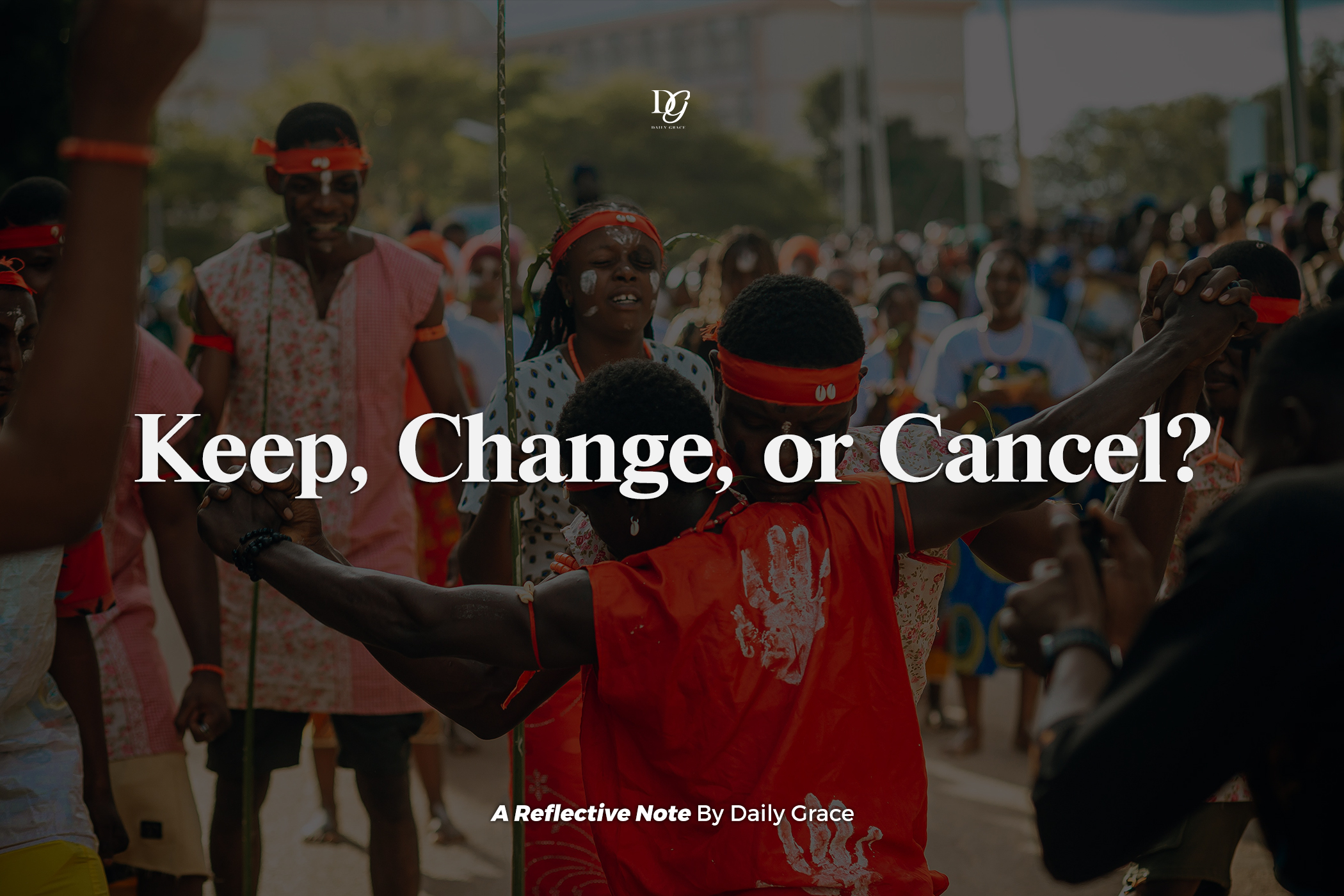
Then came the voice of the granddaughter, a 17-year-old damsel. She said, “Maybe both generations are right.” Now I’d like to ask some questions, she added, “What should we preserve? What should we change? And what should we reject?” As I overheard their conversation, the girl’s questions captured my attention.
Growing up, I often heard people speak as though there were only two options. Either the old ways were always better or the modern ways are always better. But life has taught me that reality is rarely that simple. Cultural adaptation is not merely about change. It is about discernment— the ability to recognise that every generation inherits both treasures and burdens.
About the teenager’s questions, Grandpa spoke about how history reminds us that some traditions have preserved compassion, community, responsibility, resilience, generosity, and respect. “These are treasures worth protecting,” he said. “History also reminds us that some traditions have justified injustice, silenced important voices, limited opportunities, and discouraged necessary change. Those deserve honest examination,” Mr. Ntiamoah rebutted.
He continued with how modern culture has given us greater access to education, medical advancement, technological innovation, opportunities for collaboration across nations, among others. These developments have improved countless lives. “Ntiamoah, don’t forget that modern culture has also introduced new challenges: constant comparison, loneliness despite greater connectivity, consumerism disguised as identity, name it,” Grandpa opposed.
As I reflected on their conversation, I perceived that every cultural practice deserves these questions : Does it help people flourish? Does it produce healthier individuals, families, and communities? For me, if we answer yes to these questions, then that practice deserves preservation. If it’s partly yes and partly no, perhaps it requires thoughtful change. However, if the answer consistently undermines human wellbeing, it should be courageously rejected.
One of the greatest lessons this month has taught me is that adaptation is not the same as imitation. Imitation copies without understanding but adaptation learns with discernment. The goal is not to become prisoners of yesterday nor captives of today. It is to become faithful stewards of tomorrow.
The future belongs to those who possess the courage to examine both old and new cultural practices with open minds and grounded hearts. Let’s preserve what nurtures life and improve what can become better. On the other hand, we should be bold to reject what diminishes human dignity.
©️ No Copyright infringement intended.
PS: Kindly Follow our Whatsapp Channel for more engaging content.